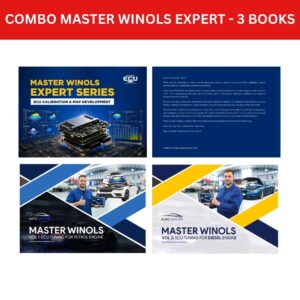
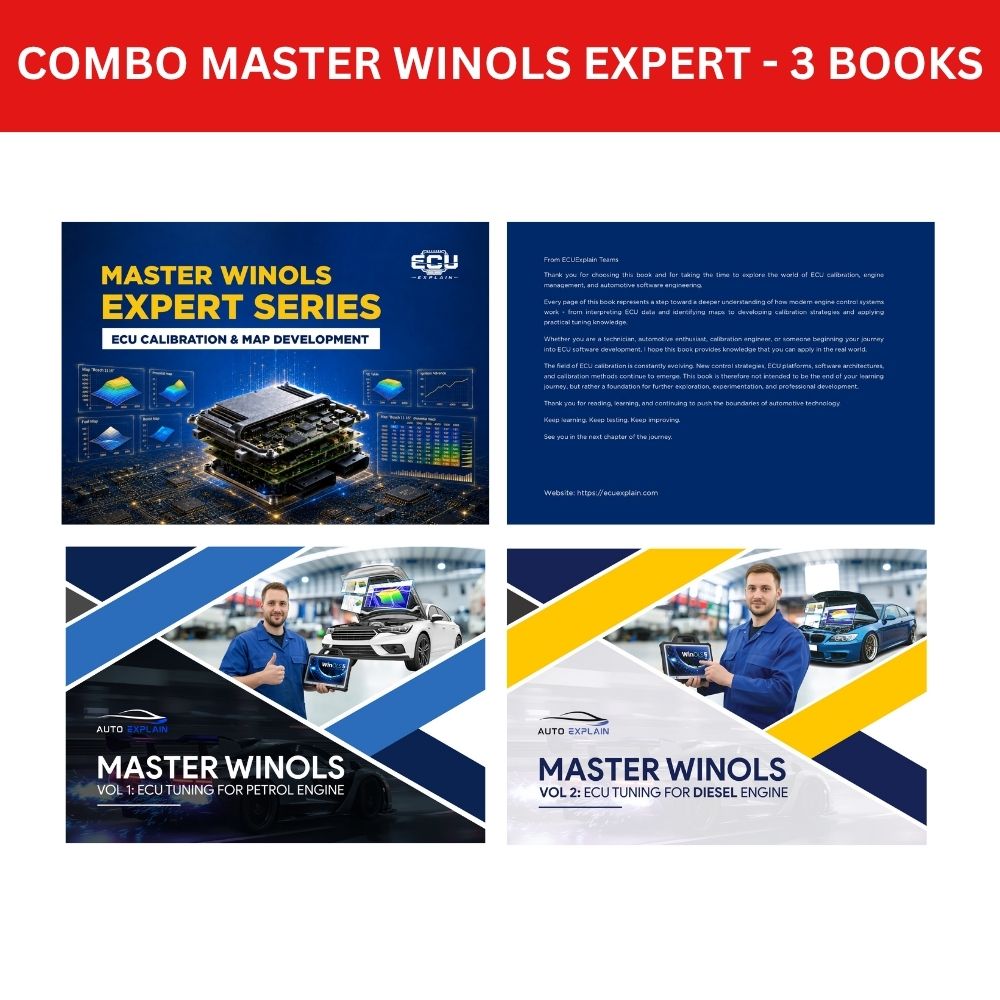


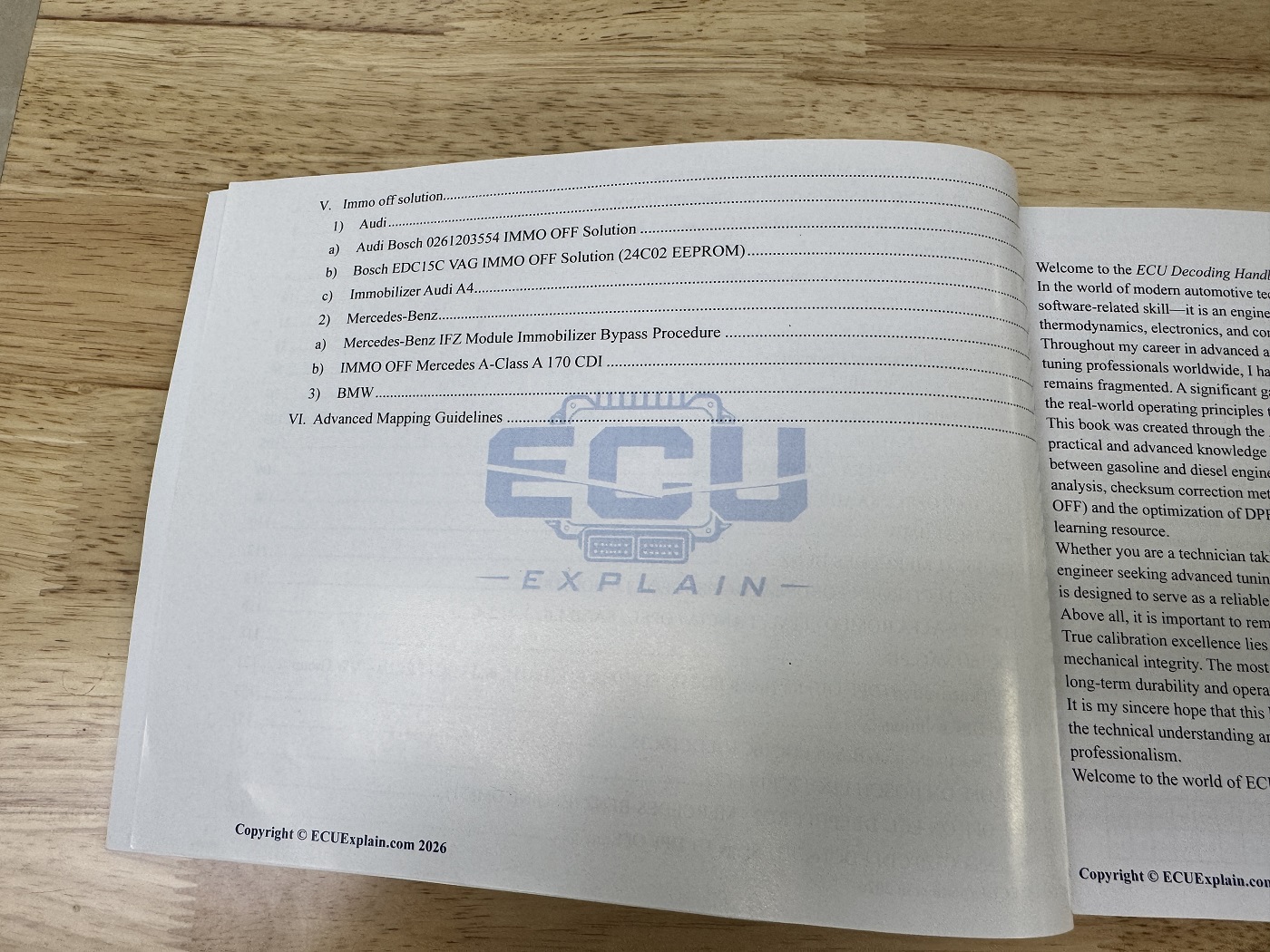


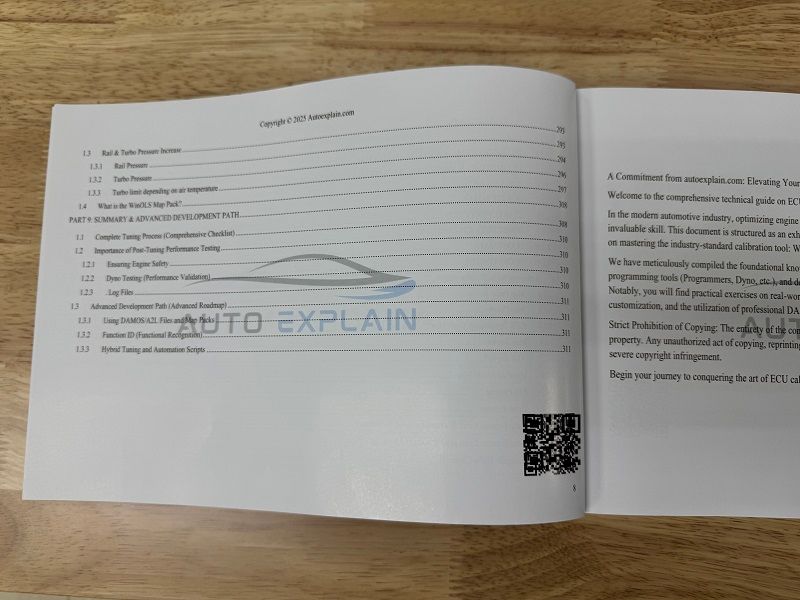
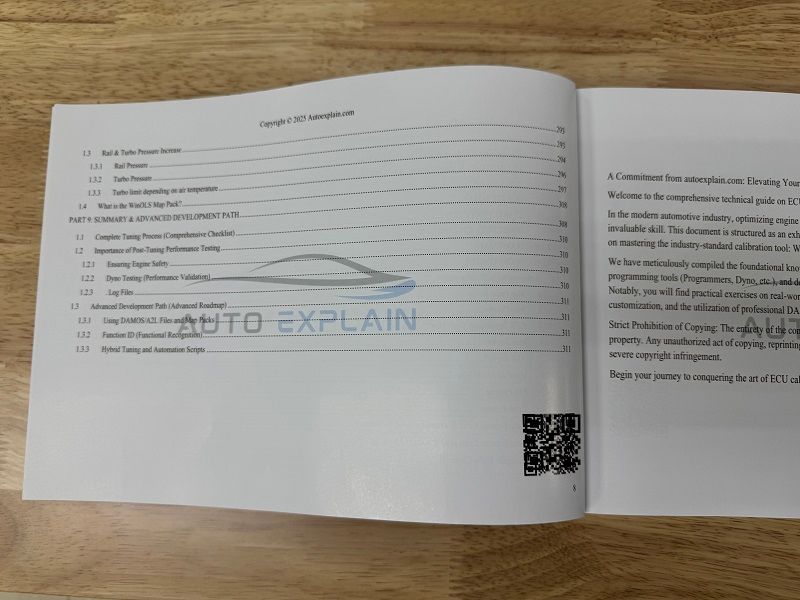
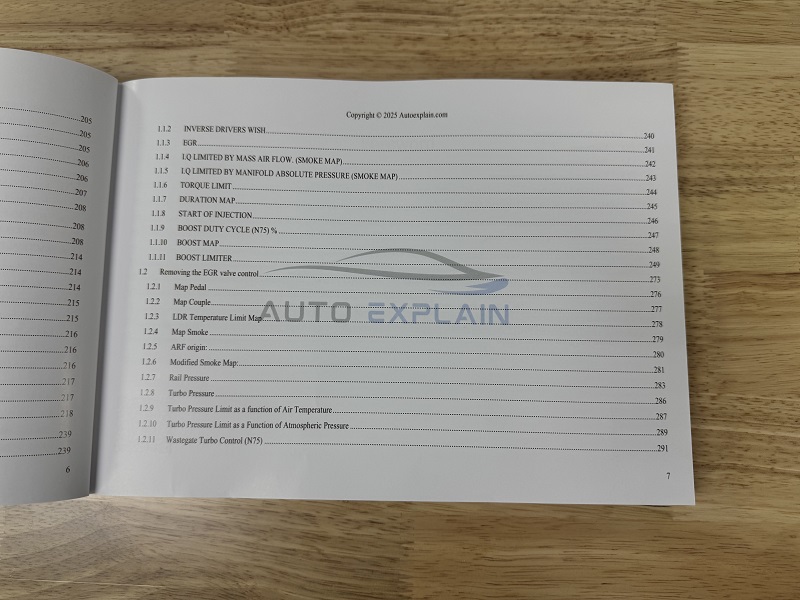
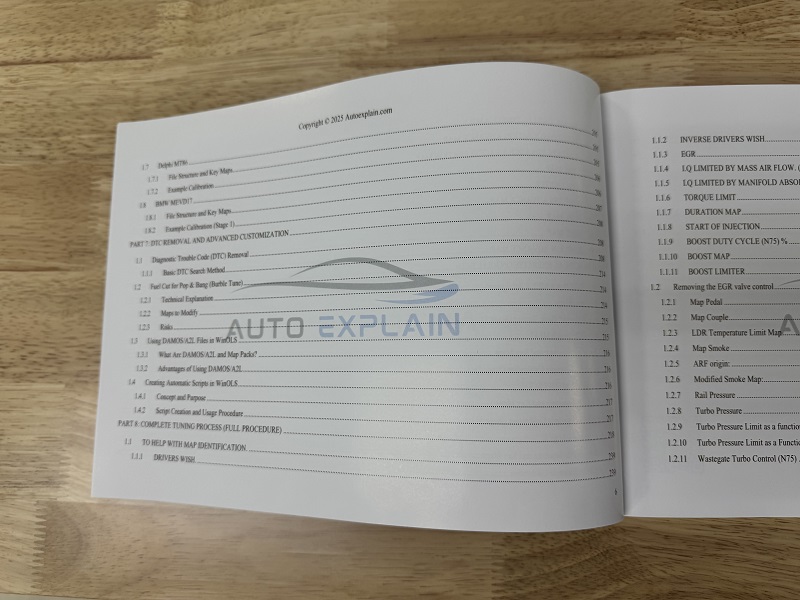
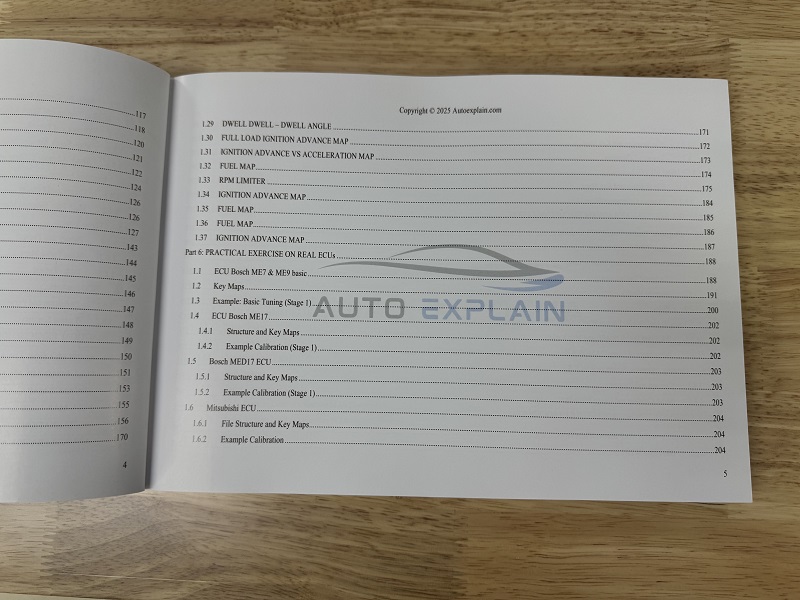
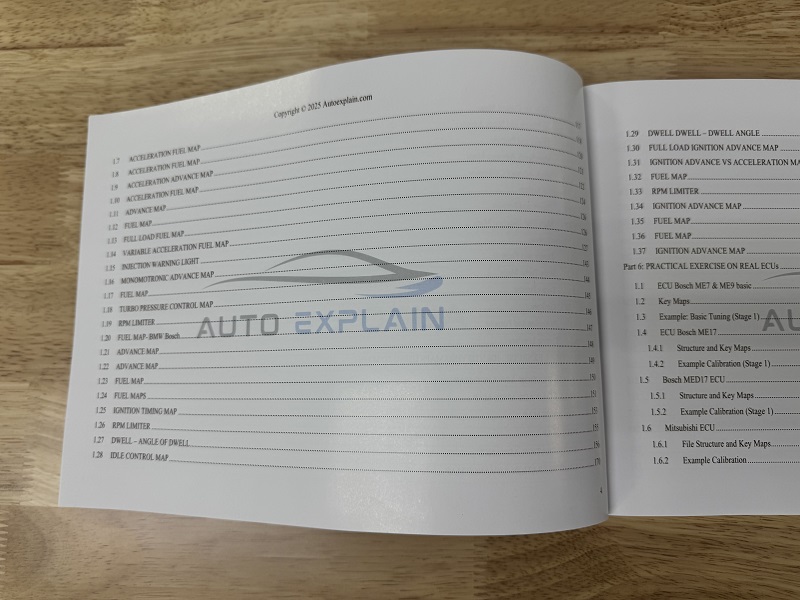
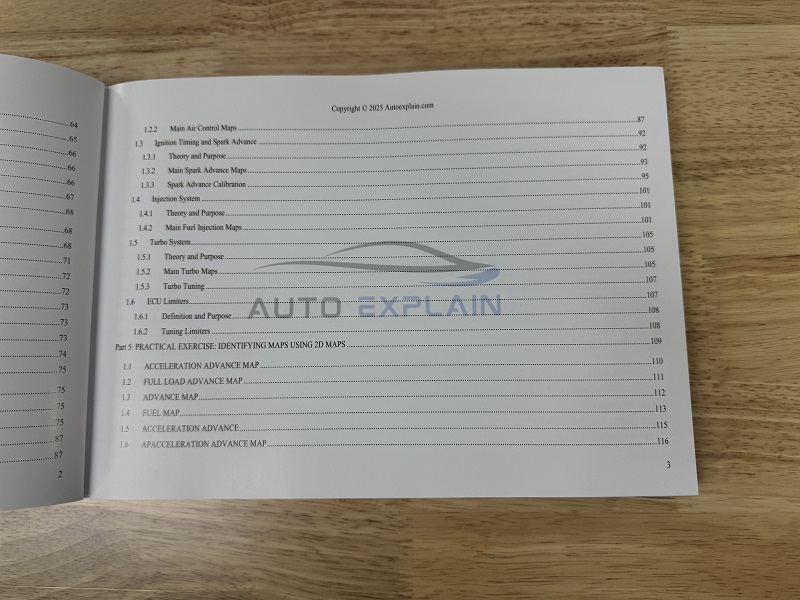
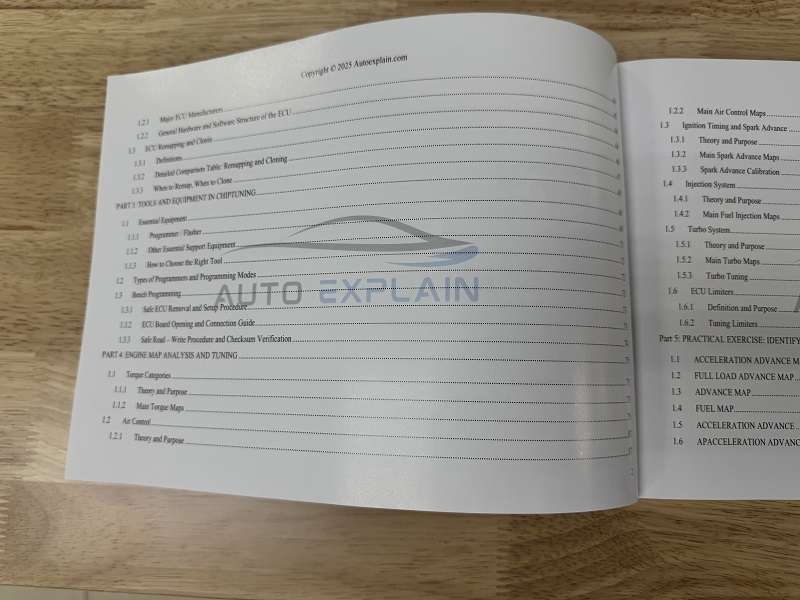
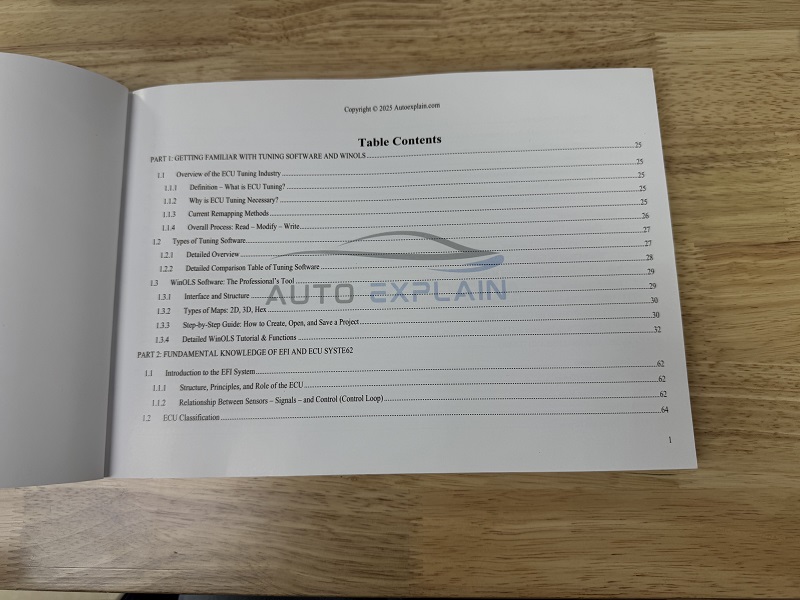
Master ECU Tuning Expert Series is a three-book physical collection for automotive professionals who want to develop their knowledge of petrol engine tuning, diesel engine calibration, and ECU map development. The collection combines foundational theory, tuning software concepts, practical map identification exercises, and ECU-specific calibration examples.
Designed for ECU tuners, automotive technicians, and aspiring calibration specialists, this collection provides a structured reference for understanding engine management systems and the relationship between ECU maps, fuel delivery, ignition timing, torque control, and boost pressure.
By bringing together three complementary books, the collection covers both petrol and diesel tuning principles while extending into more advanced calibration topics and practical ECU applications.
The Master ECU Tuning Expert Series is a physical book bundle covering three related areas of automotive ECU tuning:
Each book addresses a different part of the tuning workflow. The first focuses on petrol engine management, map analysis, and practical calibration exercises. The second develops knowledge of diesel engine systems, fuel injection, torque management, and advanced tuning methods. The third expands the collection with additional petrol and diesel ECU examples, calibration strategies, and specialized map development topics.
Together, these books offer a broader learning path than studying a single engine type or calibration topic in isolation.
The collection contains three physical books, each with a distinct technical focus.
This book introduces petrol engine tuning, ECU fundamentals, calibration software concepts, and practical map analysis.
Key topics include:
The book progresses from introductory concepts to practical exercises involving petrol engine calibration. It is suitable for readers who want to understand how engine operating parameters relate to ECU maps and calibration decisions.

You can see more at: Master WinOLS Manual Vol 1: ECU Tuning For Petrol Engine
The second book concentrates on diesel engine operation, fuel delivery, electronic diesel control, and diesel ECU remapping.
Its main subject areas include:
This volume helps readers understand the relationship between requested torque, injected fuel quantity, available air mass, rail pressure, and boost control. It also examines how these parameters interact during diesel engine calibration.
You can see more at: Master WinOLS Vol 2: ECU Tuning For Diesel Engine
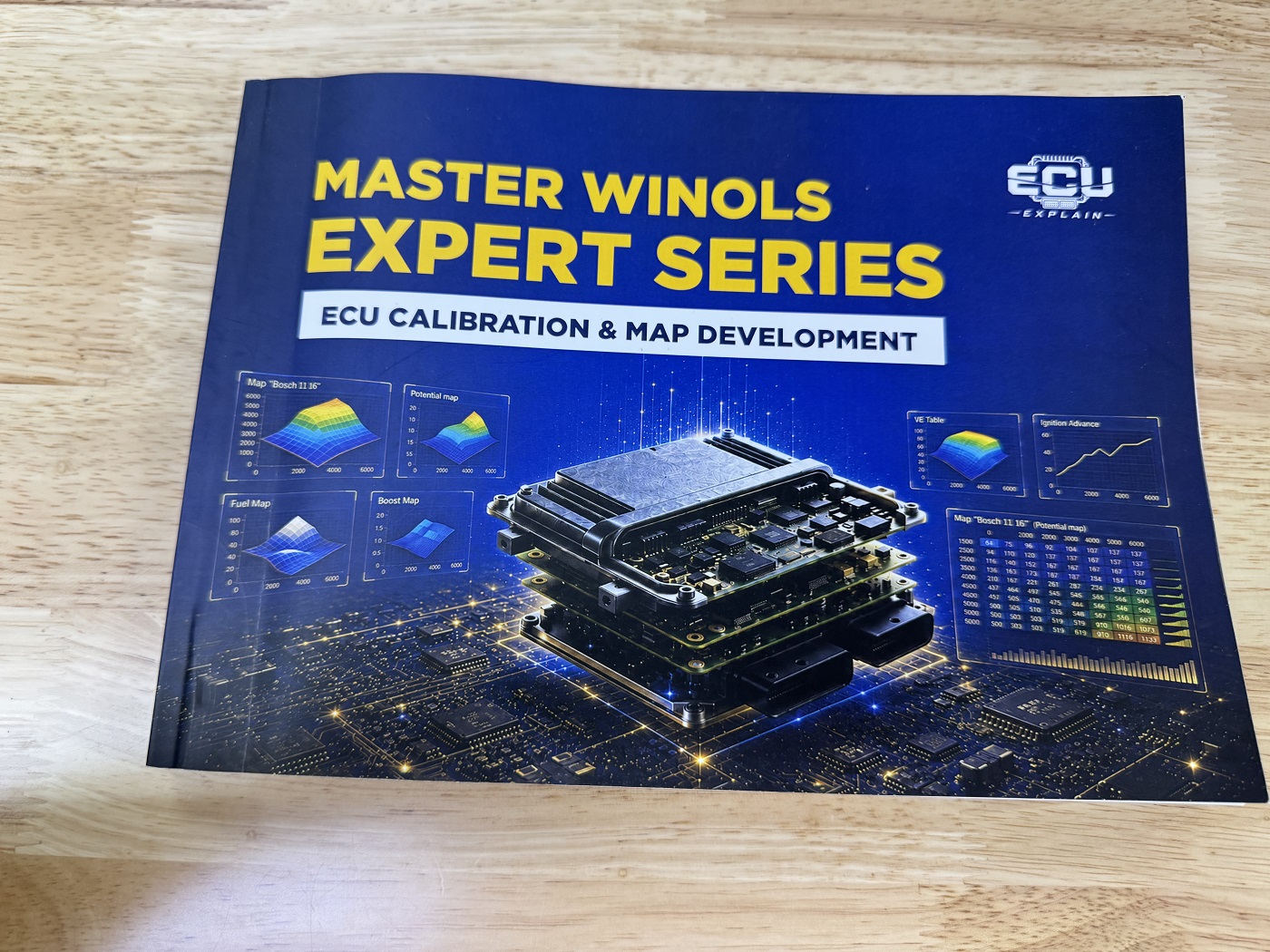
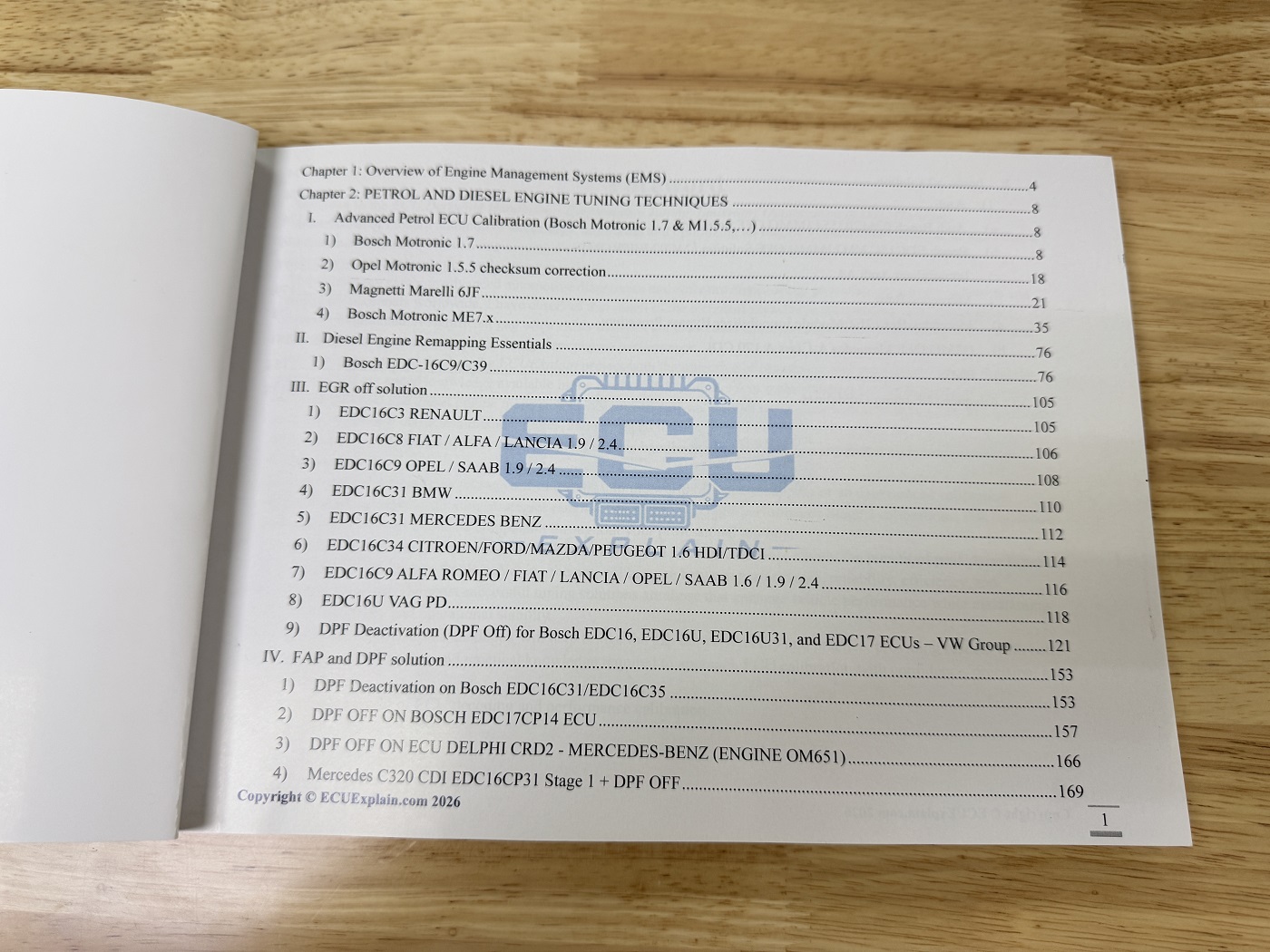
The third book expands the collection with advanced calibration examples and ECU-specific technical applications.
Its contents include:
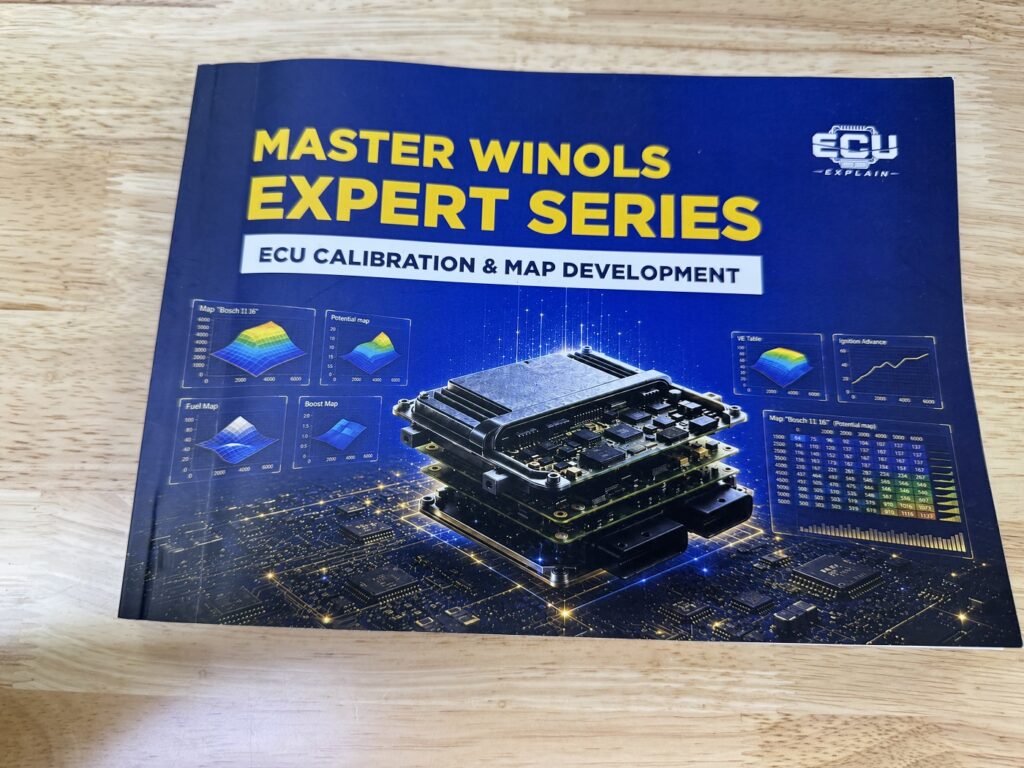
You can see more at: Master WinOLS Expert Series: ECU Calibration & Map Development
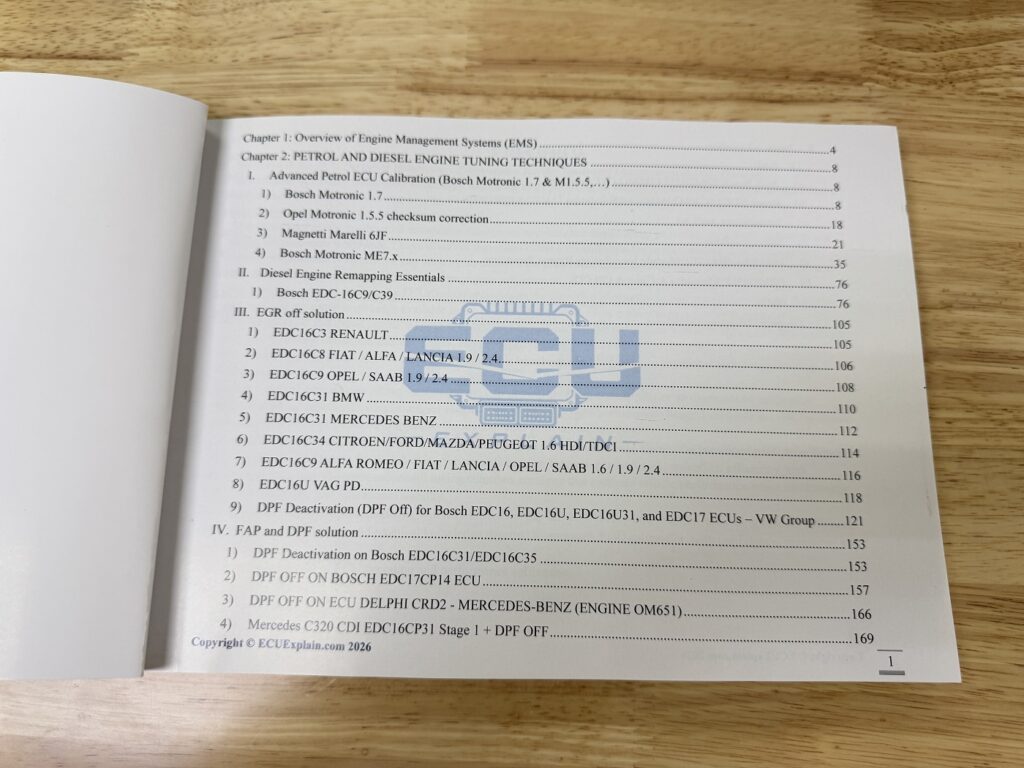
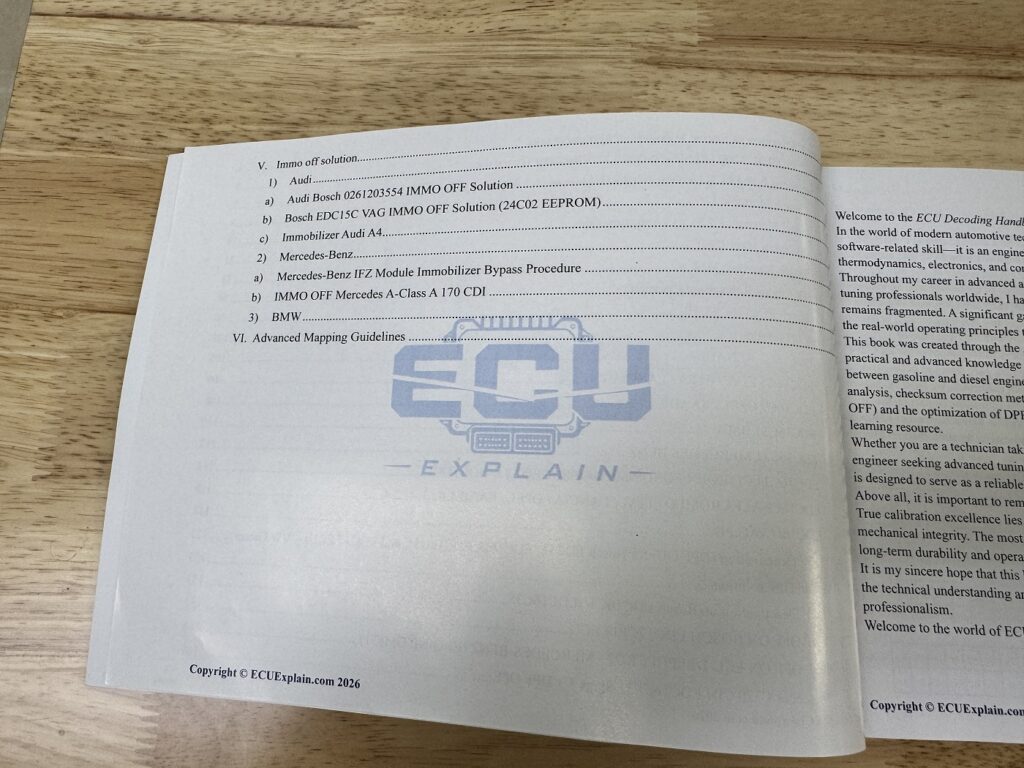
This volume is particularly relevant to readers who want to explore calibration approaches across different ECU architectures. Its examples complement the foundational and practical material covered in the first two books.
The collection addresses the main technical stages involved in understanding and developing ECU calibration.
Readers can study the structure and role of electronic control units, the relationship between sensors and actuators, and the way engine management systems regulate operating conditions.
The petrol and diesel volumes provide different perspectives on these systems. Petrol topics emphasize ignition and air-fuel management, while diesel topics focus on torque calculation, injection control, and air availability.
Map identification is an important part of ECU calibration. The books cover map structures, 2D and 3D representations, hexadecimal views, axis definitions, and the interpretation of calibration data.
Practical exercises introduce examples of fuel maps, ignition advance maps, torque limiters, boost control maps, and injection-related maps. These examples help readers connect map structures with their potential functions within engine management systems.
The petrol volume examines torque categories, air control, ignition timing, injection systems, turbocharger maps, and ECU limiters.
The diesel volume explores torque requests, fuel quantity, smoke limitation, injection timing, injection duration, rail pressure, and turbocharger control.
Studying these subjects together helps readers recognize the differences between petrol and diesel calibration strategies without treating the two engine types as interchangeable.
The books include examples involving multiple ECU families and vehicle manufacturers. These examples cover project setup, map identification, calibration exercises, and selected advanced applications.
The scope varies by book and ECU family. Readers should consult the relevant chapter when looking for a specific platform or calibration topic.
The petrol volume also discusses post-tuning performance testing, engine safety considerations, dynamometer validation, log-file analysis, and further development paths.
These topics highlight the importance of evaluating calibration changes rather than relying on map edits alone.
After working through the relevant chapters, readers can develop knowledge in the following areas:
These learning outcomes depend on the chapters studied and the reader’s existing technical experience. The books are educational references and do not replace vehicle-specific service information, appropriate equipment, or practical training.
This three-book bundle is intended for readers who want a broader understanding of automotive ECU calibration.
Basic automotive knowledge is recommended, particularly an understanding of internal combustion engines, engine sensors, electronic control systems, and vehicle electrical principles.
Readers new to ECU tuning may benefit from starting with the introductory chapters before studying advanced map analysis and ECU-specific examples.
A basic understanding of hexadecimal data, engine operating parameters, and computer-based technical workflows will also be useful. Practical calibration work requires suitable equipment, reliable ECU files, and an understanding of the risks associated with modifying engine control parameters.
The books should be used as learning and reference materials, with calibration decisions evaluated against the requirements of the relevant engine and vehicle.
The main advantage of this bundle is its complementary coverage of petrol tuning, diesel tuning, and advanced ECU calibration.
Rather than focusing exclusively on one engine type, the collection allows readers to compare different engine management strategies and study multiple ECU applications.
Its practical examples also provide a reference for readers who want to connect theoretical concepts with actual calibration maps and ECU structures.
The collection is especially useful for readers building a technical library for continued learning, professional reference, and the development of ECU tuning skills.
| Specification | Details |
|---|---|
| Product name | Master ECU Tuning Expert Series |
| Product type | Three-book physical bundle |
| Number of books | 3 |
| Main subjects | Petrol ECU tuning, diesel ECU tuning, ECU calibration and map development |
| Technical level | Beginner to advanced, depending on the volume and chapter |
| Intended audience | ECU tuners, automotive technicians, calibration specialists, engineering students |
| Vehicle-related coverage | Multiple ECU families and selected automotive platforms |
| Format | Physical books |
| Language | English |
| Educational purpose | Technical learning and reference |
The bundle contains three physical books covering petrol engine calibration, diesel engine calibration, and advanced ECU calibration and map development.
Yes. The first volumes include introductory material on ECU fundamentals and engine management. However, advanced calibration examples may require prior automotive knowledge and familiarity with ECU data.
Yes. The first book focuses on petrol engines, the second focuses on diesel engines, and the third covers additional calibration examples across petrol and diesel ECU applications.
Yes. The supplied contents include map identification exercises, ECU-specific calibration examples, and selected practical applications. The exact topics vary by volume.
This product is a bundle of three physical books. An Ebook version is also available separately as a digital reading product; it should not be assumed to be a downloadable PDF.
No manufacturer authorization is implied. The books are independently compiled educational materials based on accumulated technical knowledge, experience, and research. They are not presented as manufacturer-authored or manufacturer-authorized training publications.
The Master ECU Tuning Expert Series brings together three complementary references for studying petrol ECU tuning, diesel ECU tuning, and advanced calibration techniques.
Whether you are developing foundational knowledge or expanding your understanding of engine maps and ECU-specific applications, this collection provides a structured technical resource for continued learning.
Review the contents of all three volumes to determine whether their coverage matches your experience level and learning objectives, then choose the collection that best supports your automotive technical development.
| Weight | 1 kg |
|---|