

Master BMW Diagnostic and Coding Knowledge with a Two-Book Technical Collection
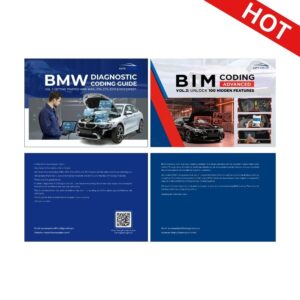
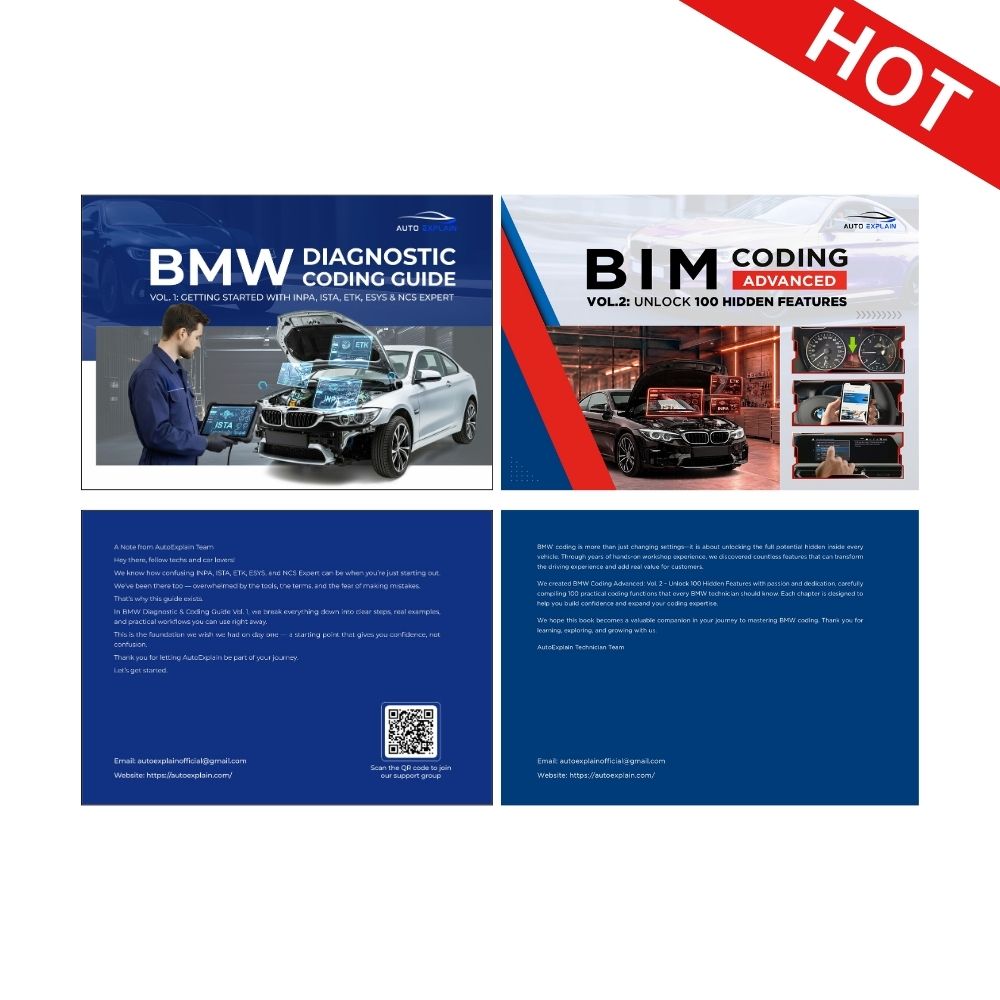
The BMW Diagnostic & Coding Master Combo is a two-book technical collection designed for readers who want to develop their understanding of BMW vehicle diagnostics, electronic control units (ECUs), coding procedures, programming workflows, and vehicle feature customization.
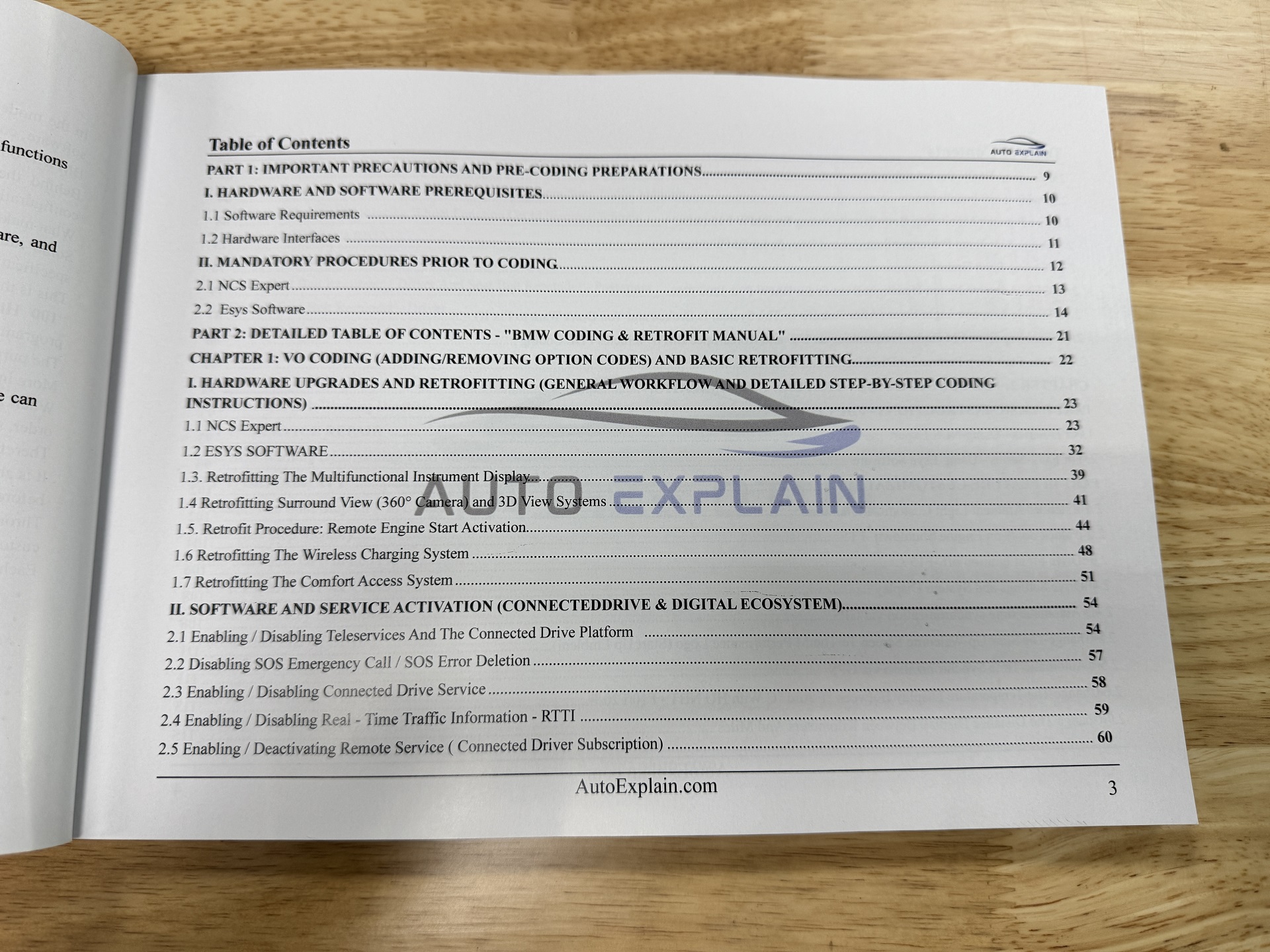
This collection combines diagnostic fundamentals with advanced coding and retrofit topics. The first book focuses on diagnostic workflows, vehicle identification, technical information, control unit analysis, coding preparation, and ECU programming concepts. The second book explores vehicle order coding, retrofit configuration, and feature customization across selected vehicle systems.
Together, these books provide a structured reference for automotive technicians, independent workshop professionals, automotive electronics specialists, and experienced BMW enthusiasts who want to expand their technical knowledge of modern vehicle electronics.
Whether you are building a foundation in BMW diagnostic procedures or exploring more advanced configuration topics, this two-book collection organizes a broad range of subjects into a practical learning resource.
This product includes two physical technical books:
The first volume introduces the fundamental concepts and workflows involved in BMW vehicle diagnostics, technical information research, coding, and ECU programming.
Its coverage includes vehicle identification, model selection, diagnostic interface preparation, control unit information, live data, fault memory, test plans, wiring diagrams, component locations, parts references, coding data, and programming-related procedures.
The book also introduces selected coding and programming topics for different BMW vehicle platforms, including vehicle order data, control unit configuration, and platform-specific programming concepts.
See more BMW Vol.1 at: https://autoexplain.com/product/bmw-diagnostic-coding-guide-repair-manual/

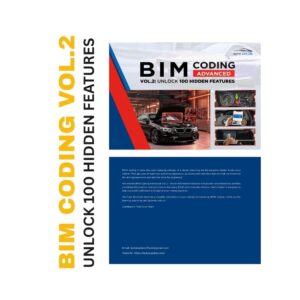
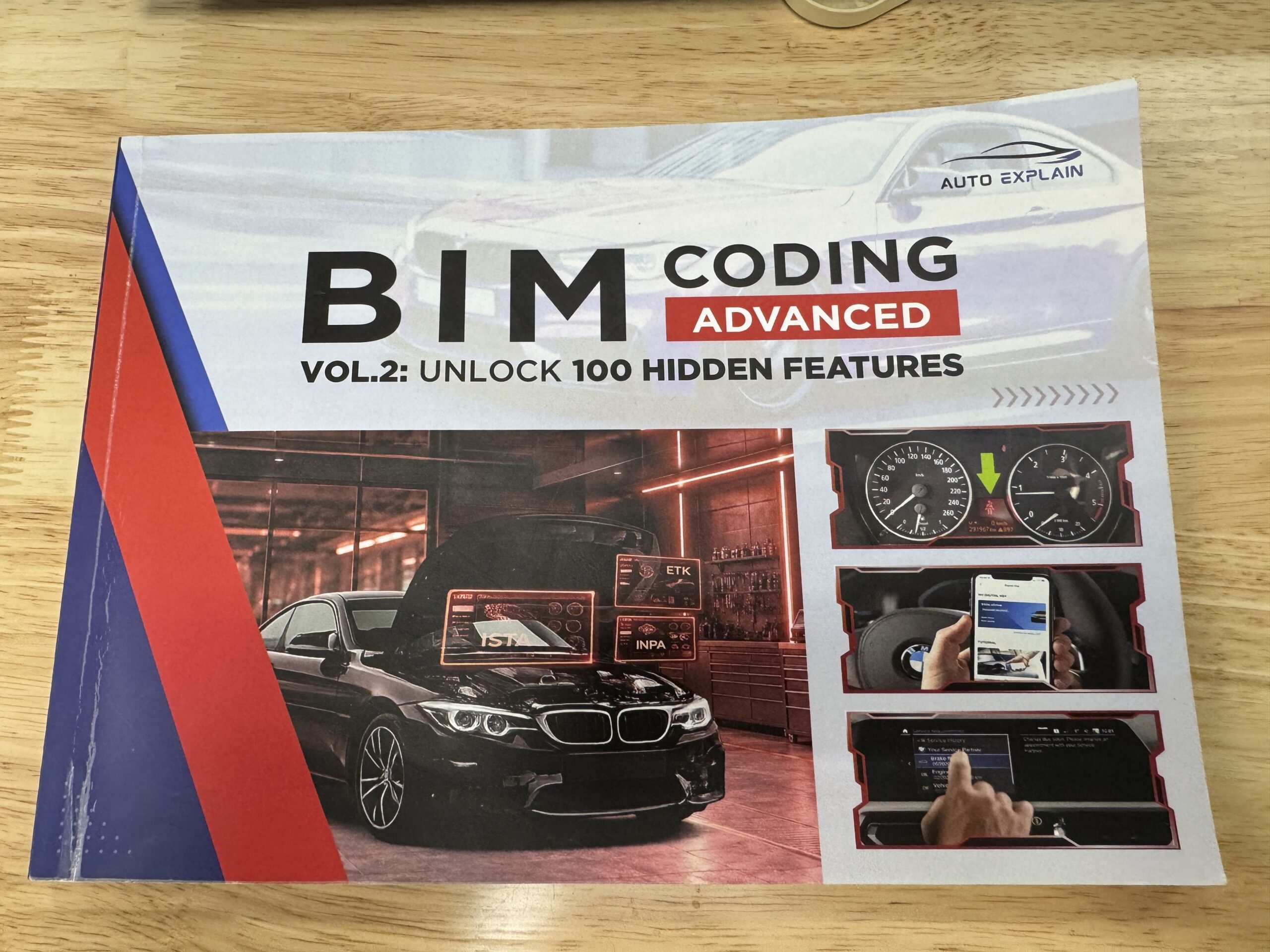
The second volume focuses on more advanced vehicle configuration and coding applications.
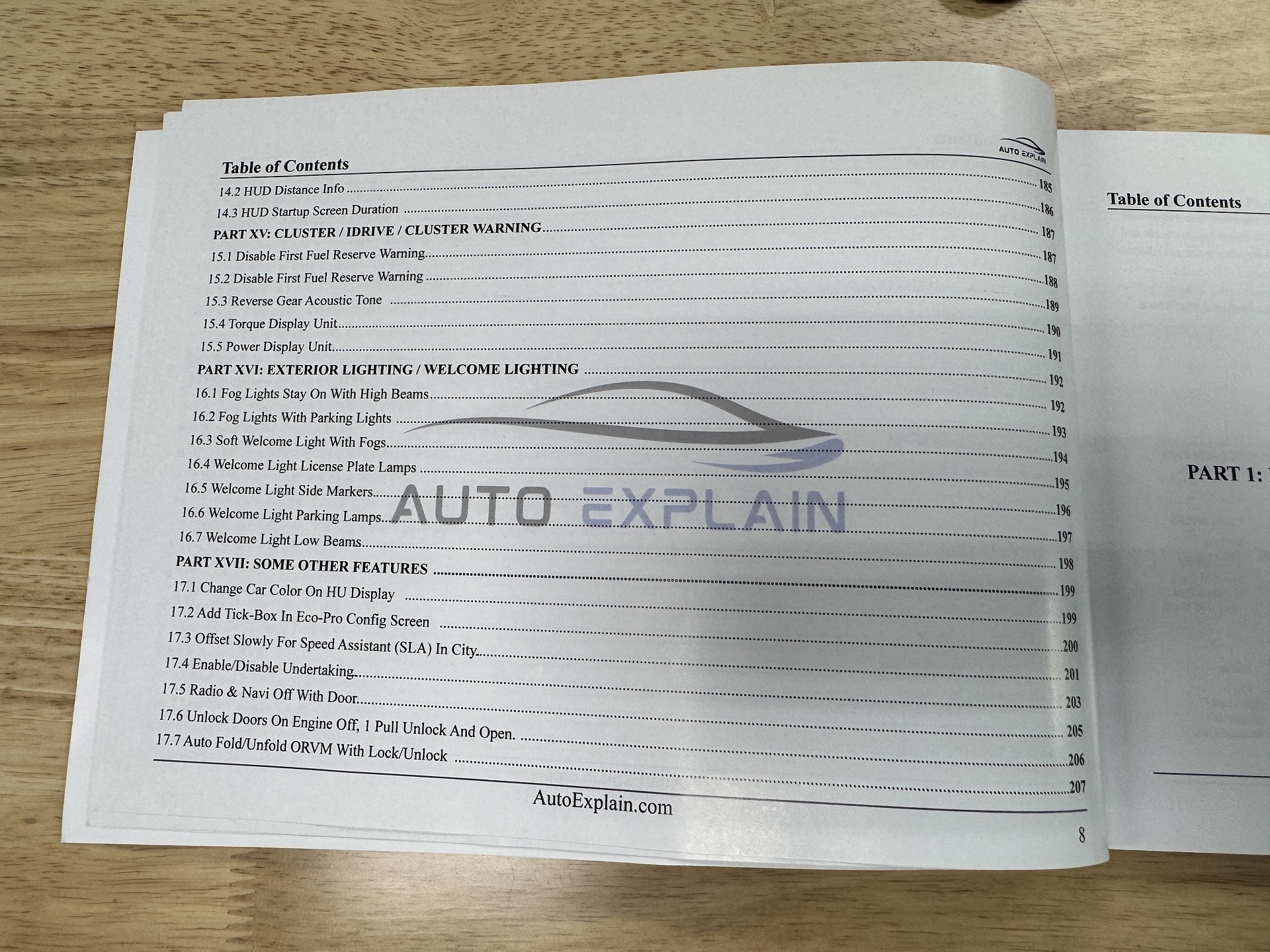
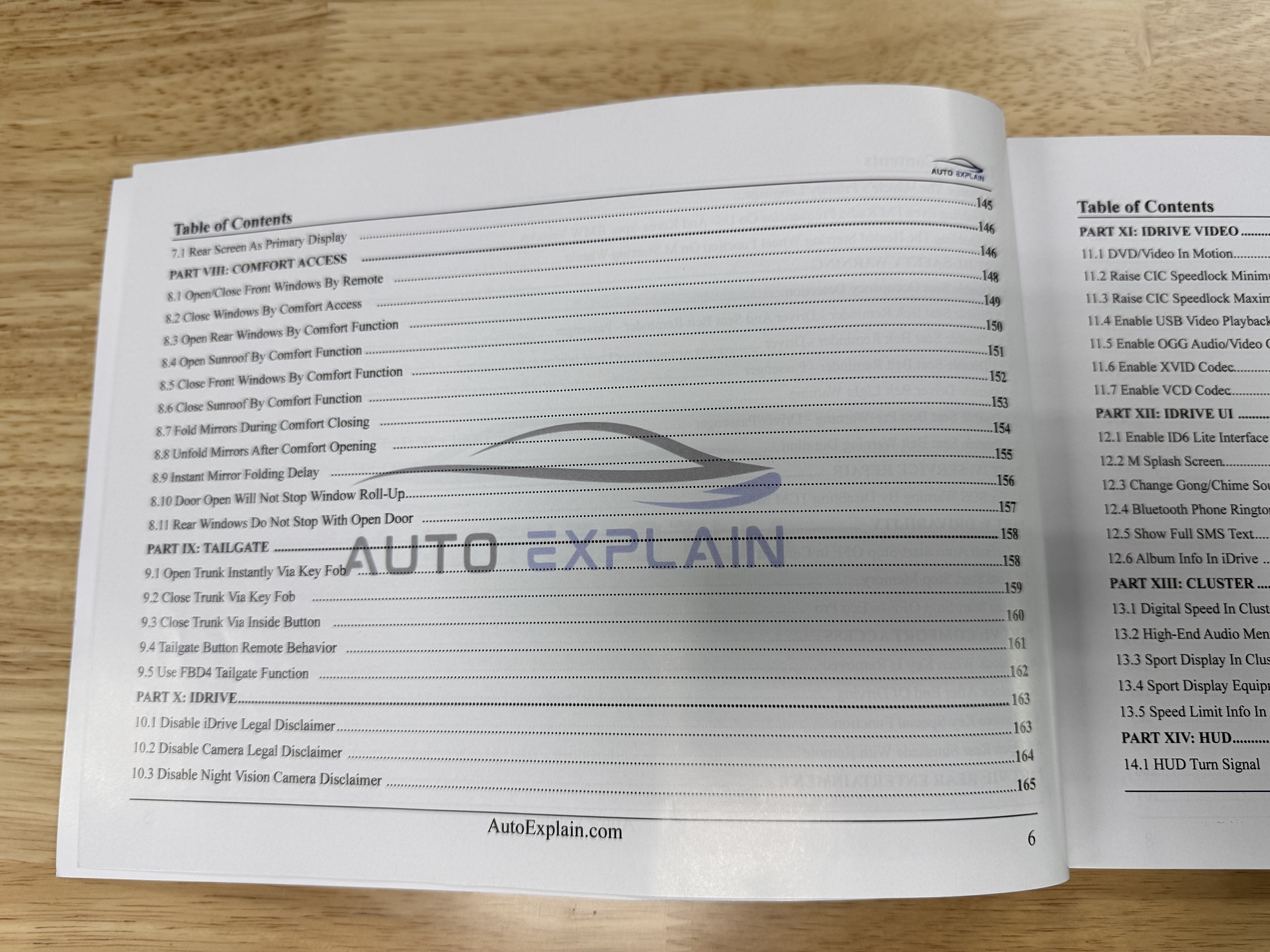
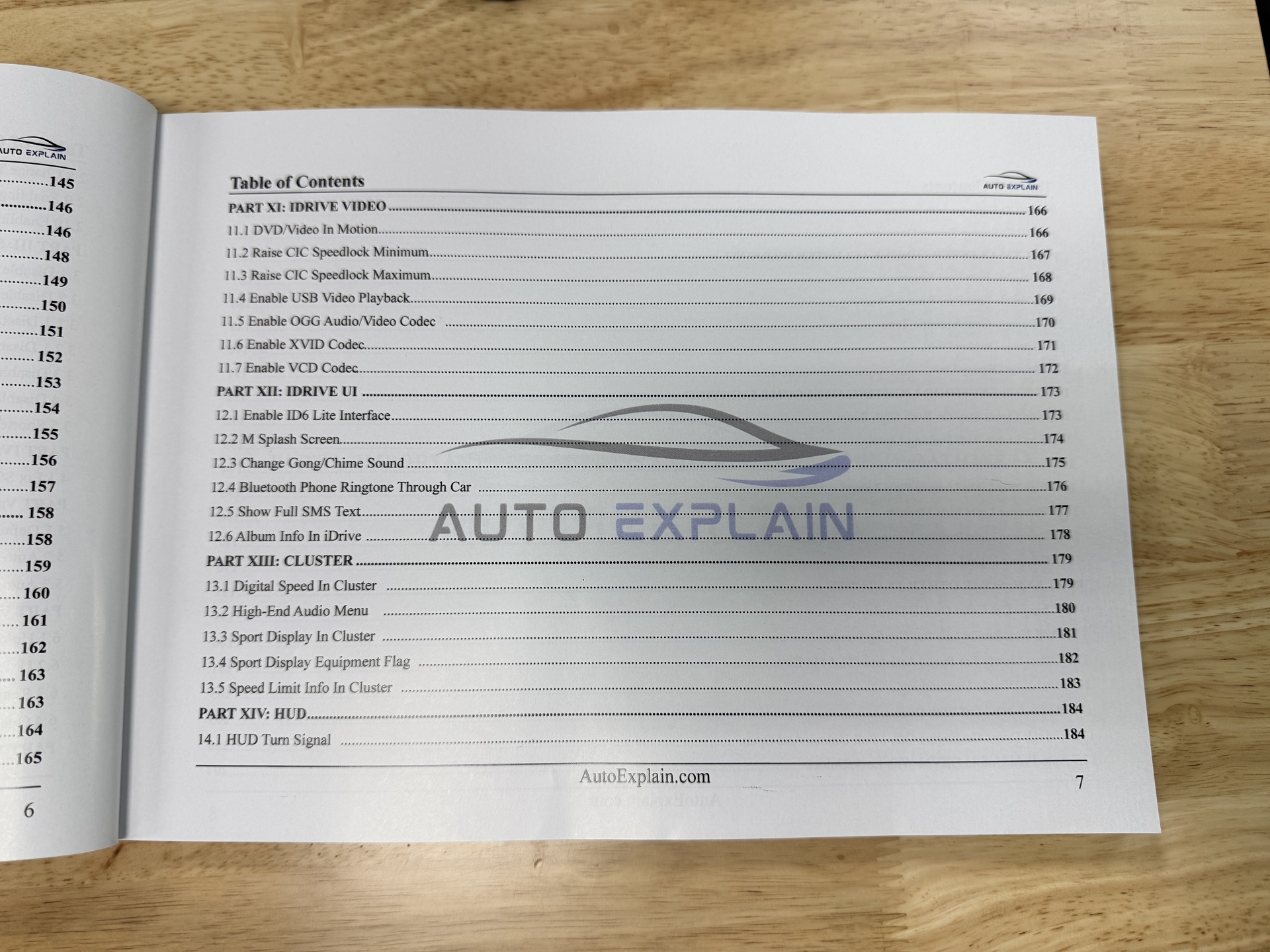
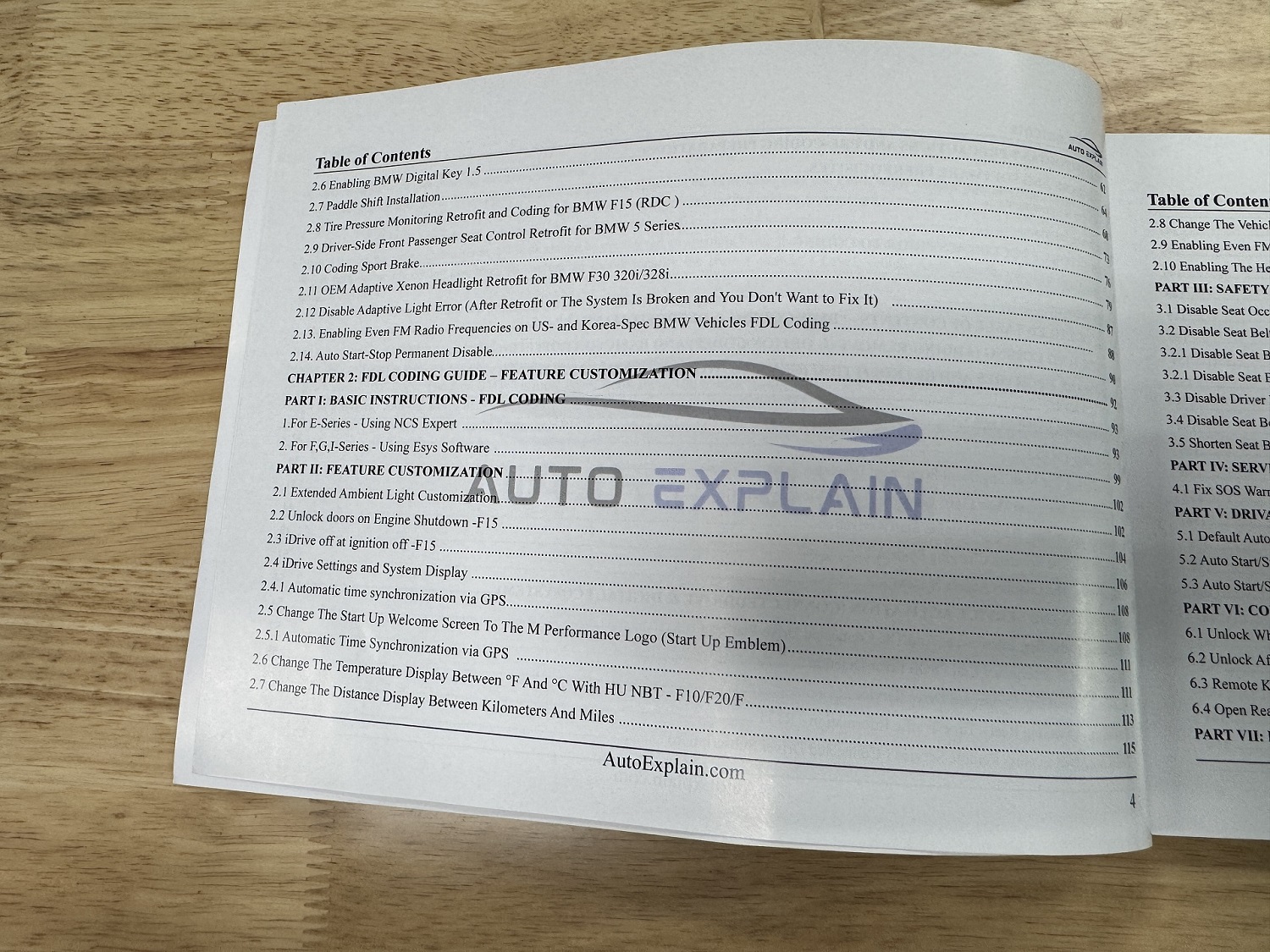
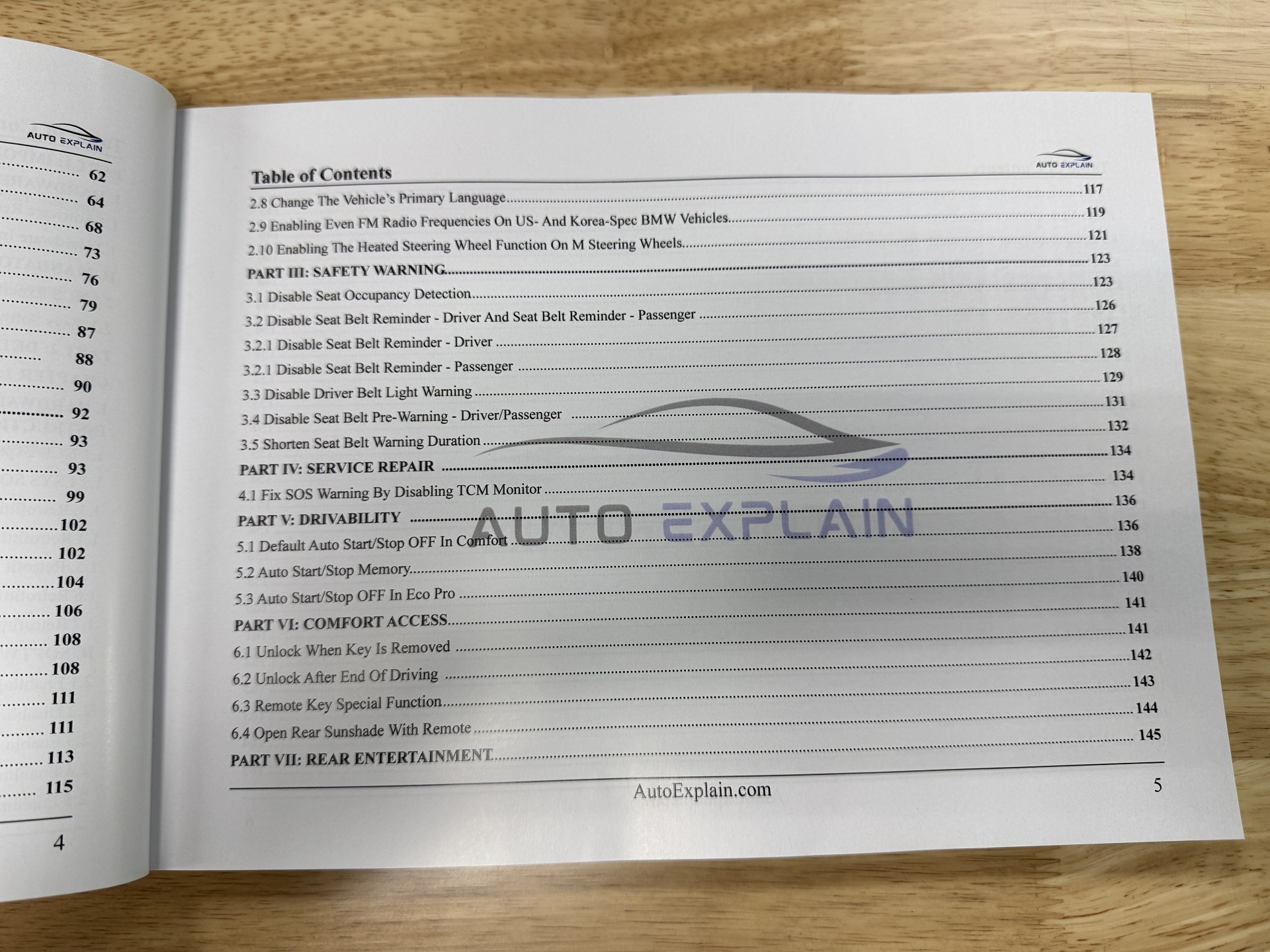
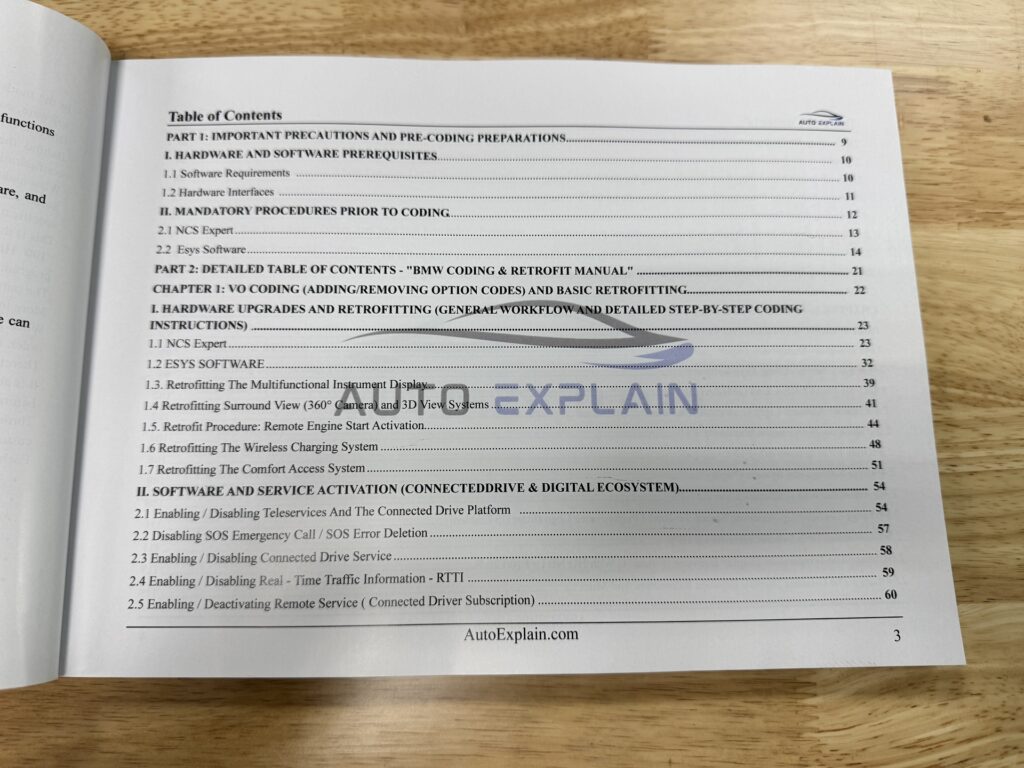
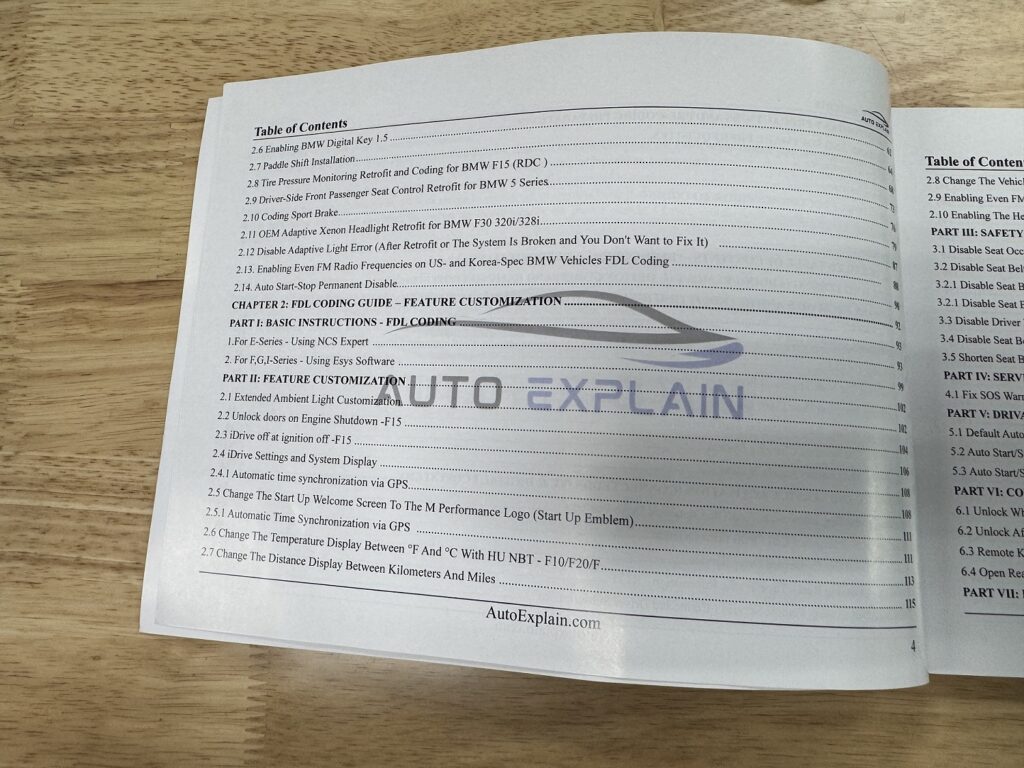
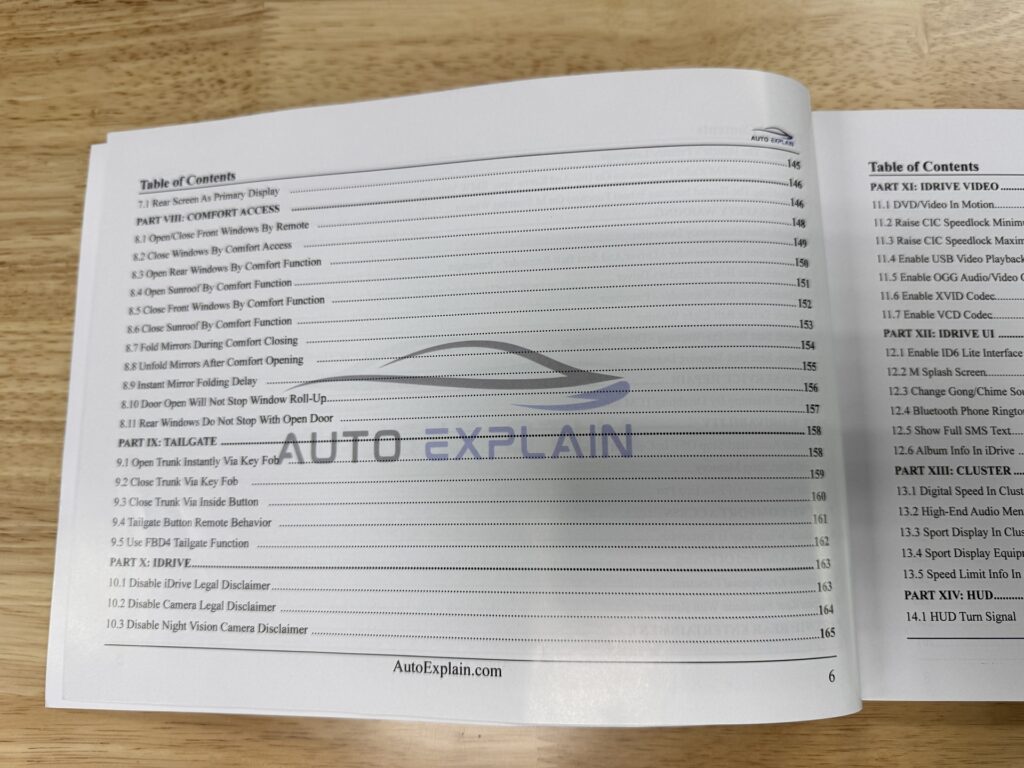
Its topics include vehicle order coding, adding or removing option codes, selected retrofit procedures, comfort and convenience functions, lighting configuration, instrument cluster displays, head-up display settings, infotainment customization, and other vehicle-specific features.
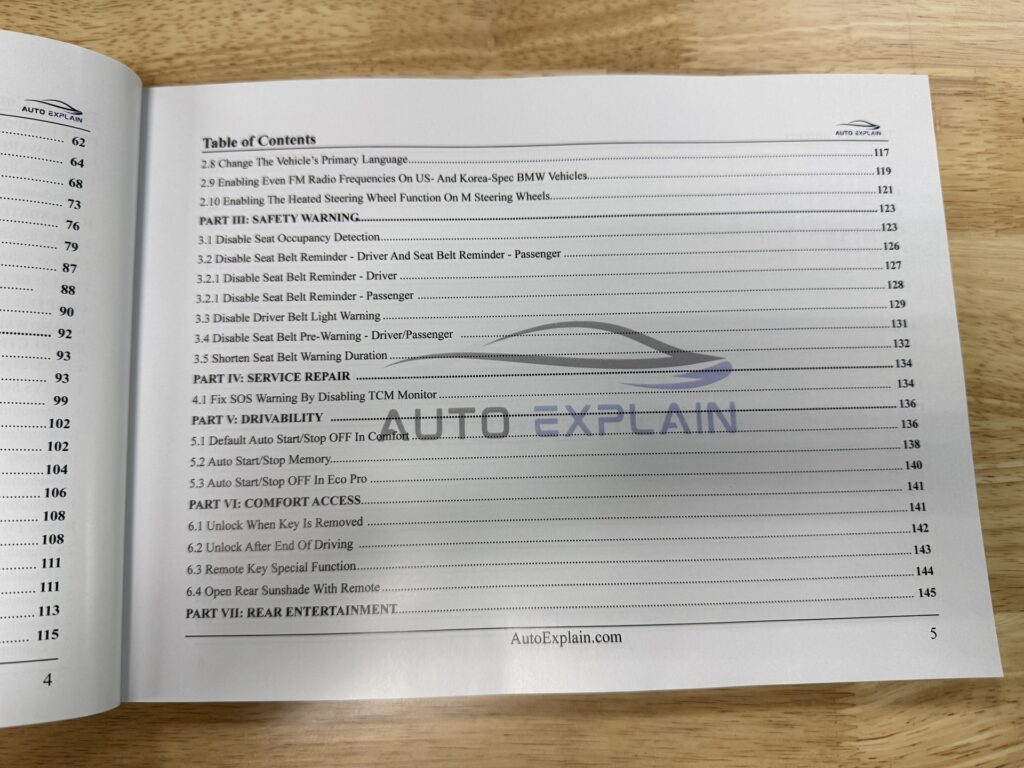
The book also covers selected topics related to ConnectedDrive services, digital key functions, tire pressure monitoring retrofits, comfort access, remote window operation, tailgate behavior, and Auto Start-Stop configuration.
Together, the two books progress from diagnostic and coding fundamentals toward more specialized vehicle configuration and feature customization topics.
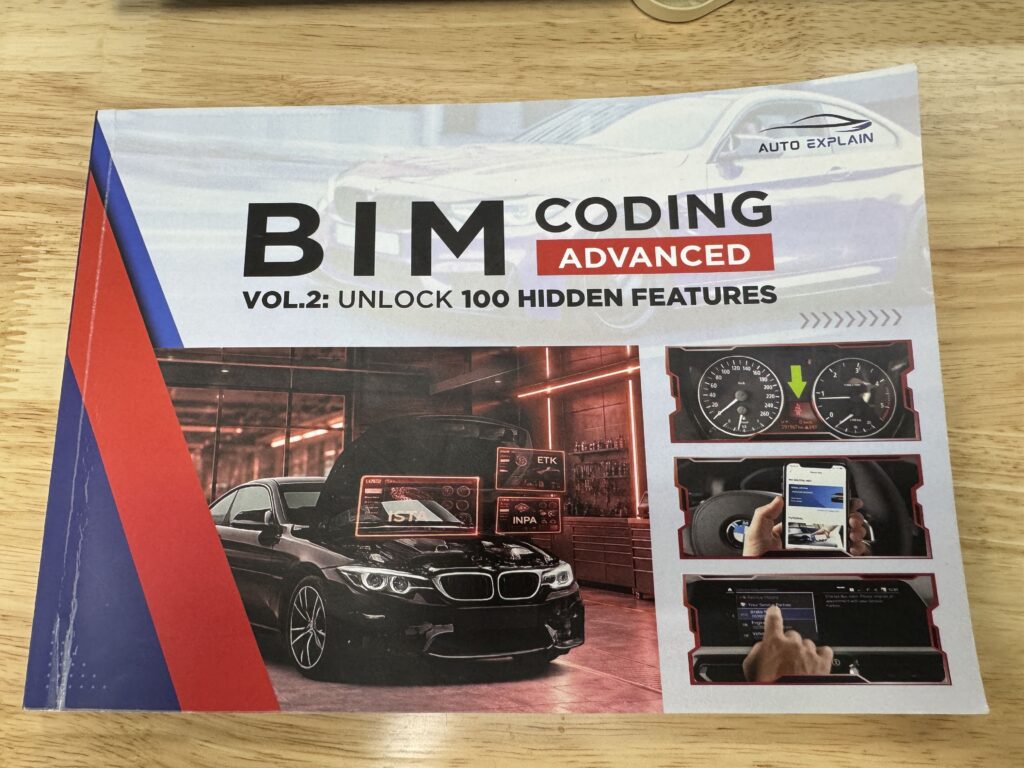
See detail BMW Vol.2 at: https://autoexplain.com/product/bim-coding-advanced-vol-2/
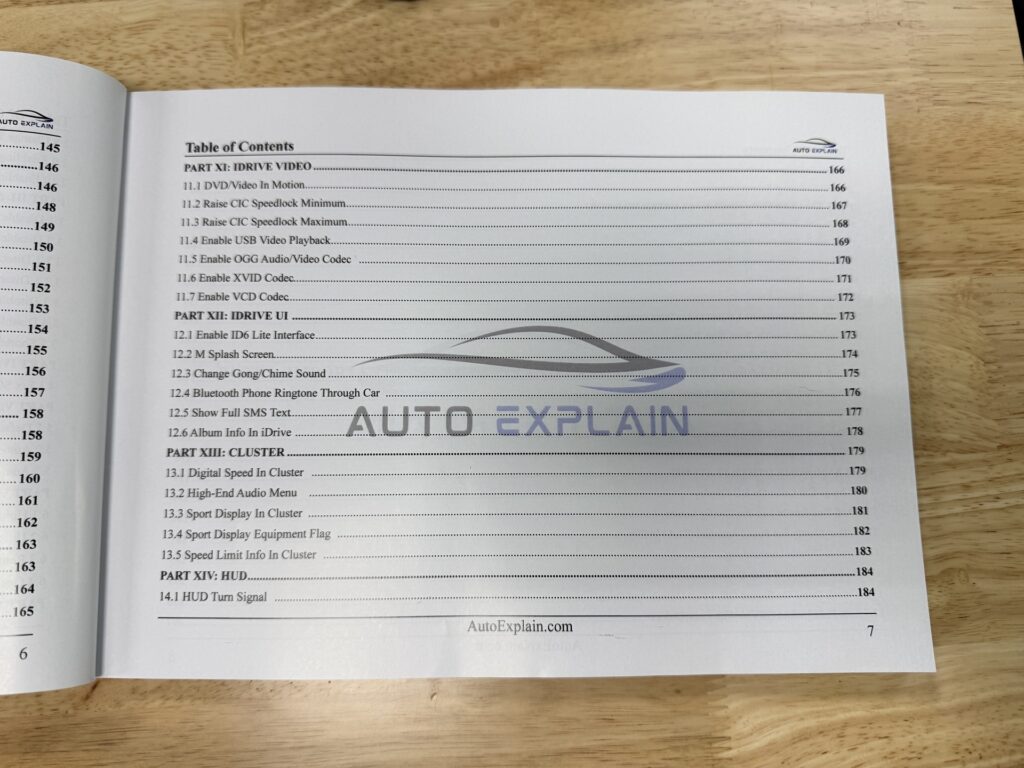
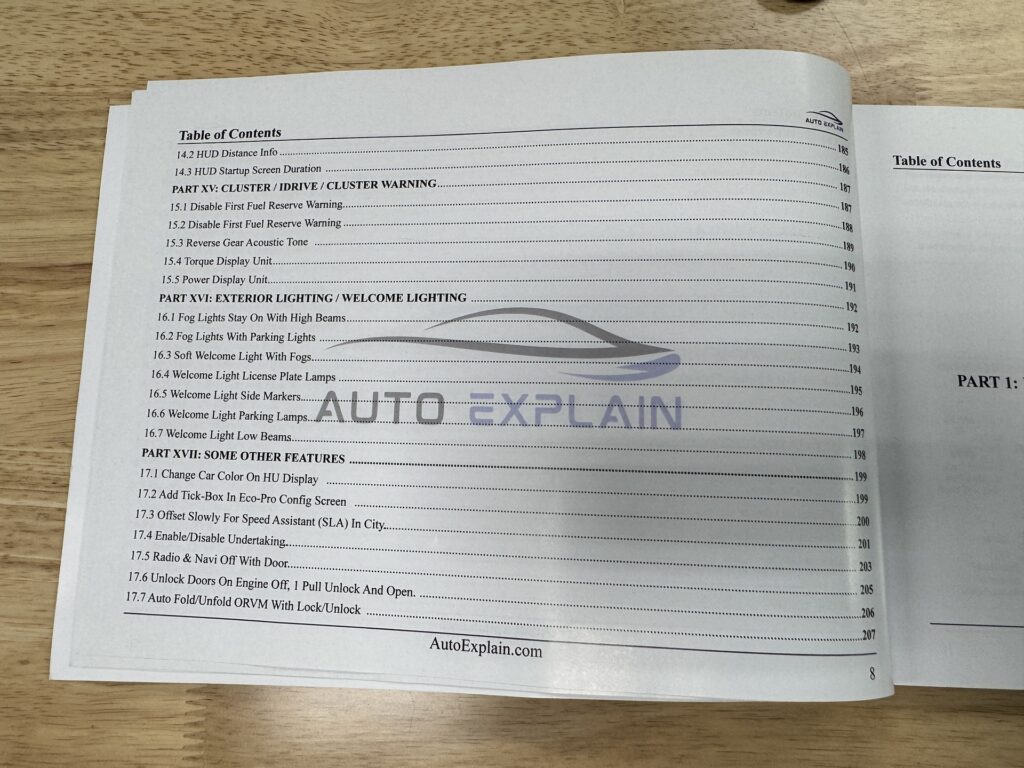
The collection covers several interconnected areas of BMW vehicle electronics. The exact procedures and available functions depend on the vehicle platform, model year, equipment configuration, and control unit version.
Understanding the vehicle is an important starting point for diagnostic and coding work. The first volume covers topics related to vehicle identification and selecting the appropriate model for technical operations.
You will explore:
These topics help readers understand why accurate vehicle identification matters before beginning diagnostic or configuration work.
The first book introduces diagnostic workflows used to examine electronic vehicle systems and identify potential faults.
Covered subjects include:
These topics provide a structured overview of how diagnostic information is organized and how technicians can approach electronic system investigations.
Accurate technical references are essential when investigating electrical and electronic systems. The book includes sections on searching technical information and locating relevant vehicle components.
The content covers:
This material can help readers become more familiar with technical documentation and the relationship between vehicle components, wiring, and electronic modules.
The first volume introduces coding-related concepts, including vehicle order data and control unit configuration.
Topics include:
These sections establish a foundation for understanding how vehicle configuration data relates to supported equipment and electronic control units.
The first book also covers selected programming-related subjects for BMW vehicle platforms.
Readers can explore:
Programming and coding are not interchangeable. Coding generally concerns configuration parameters, while programming may involve writing software or calibration data to a control unit. The book’s topics provide an introduction to these related but distinct technical areas.
The second volume moves into more advanced configuration topics, including adding or removing option codes and preparing selected retrofits.
The table of contents includes retrofit subjects such as:
These subjects illustrate the range of vehicle equipment and configuration topics addressed in the second book. Actual retrofit feasibility depends on the vehicle, installed hardware, regional specification, and system compatibility.
The second volume includes coding topics related to everyday vehicle functions and convenience settings.
Examples include:
This section is relevant to readers interested in understanding how supported configuration parameters can influence vehicle behavior.
Lighting-related topics include selected exterior and welcome lighting functions.
The book’s coverage includes:
Because lighting systems can be subject to vehicle-specific requirements and regional regulations, configuration changes should be assessed against the vehicle’s original equipment and applicable legal requirements.
The second book covers selected display and driver-information customization topics.
These include:
These subjects help readers understand the types of driver-information features that may be configurable on supported vehicle platforms.
Infotainment-related topics form another part of the second volume.
The listed subjects include:
The availability of individual settings varies according to the infotainment generation, installed equipment, regional specification, and software version.
The second volume also includes selected warning and service-related configuration subjects.
Topics include:
These subjects should be approached carefully. Safety-related alerts and legally required warning functions should not be disabled or modified in ways that compromise occupant protection, road safety, or regulatory compliance.
The two-book collection may be useful for readers who work with, study, or maintain BMW electronic systems.
Workshop technicians can use the collection as a reference for diagnostic workflows, control unit information, wiring diagrams, fault memory, and selected coding-related concepts.
Independent repair professionals may find the coverage useful when expanding their understanding of vehicle configuration, retrofit considerations, and electronic system workflows.
Readers interested in control unit structures, coding data, programming concepts, and vehicle configuration can use the books to organize their technical learning.
Students studying vehicle electronics and diagnostics can use the collection to become familiar with relevant terminology and practical subject areas.
Enthusiasts with an existing understanding of automotive electronics may appreciate the coverage of supported comfort functions, infotainment settings, display configuration, and retrofit topics.
The books are intended as technical learning and reference materials. They should not be treated as a substitute for appropriate training, verified vehicle-specific documentation, or professional judgment.
Some familiarity with automotive systems will make the material easier to follow.
Readers will benefit from understanding:
Beginners can start with the first volume and use it to build a foundation before moving to the more specialized topics in the second book.
For practical work, readers should verify vehicle compatibility, follow suitable workshop procedures, maintain stable power supply conditions where required, and use appropriate diagnostic equipment. Control unit coding or programming can affect vehicle operation if performed incorrectly.
The primary advantage of this combo is its broad subject coverage across two related technical areas.
These benefits describe the books’ subject coverage, not a guarantee that every procedure or feature will apply to every BMW model.
| Product detail | Description |
|---|---|
| Product name | BMW Diagnostic & Coding Master Combo |
| Collection | Two physical technical books |
| Book 1 | BMW Diagnostic Coding Guide – Vol. 1: Getting Started with BMW Diagnostic & Coding Systems |
| Book 2 | BMW Coding Advanced Vol. 2: Vehicle Configuration, Retrofits & Feature Customization |
| Main topics | Diagnostics, coding, ECU programming concepts, vehicle configuration, retrofits, feature customization |
| Vehicle focus | BMW |
| Intended use | Technical learning and reference |
| Target readers | Automotive technicians, independent specialists, electronics learners, and experienced enthusiasts |
| Format | Physical books |
| Digital edition | An Ebook version may also be available separately; an Ebook is a digital book format and should not be assumed to be a downloadable PDF |
Please note: The specific models, functions, and procedures covered depend on the individual book contents. The collection does not guarantee universal compatibility with every vehicle or control unit.
The combo includes two physical books. The first covers diagnostic fundamentals, technical information, control unit analysis, coding concepts, and selected programming topics. The second focuses on vehicle order coding, retrofits, and feature customization.
Readers with basic automotive electrical knowledge will find it easier to understand the technical content. Beginners can start with the first volume before progressing to the advanced configuration subjects in the second book.
Yes. The first book covers diagnostic workflows, fault memory, live data, technical references, coding fundamentals, and selected programming topics. The second covers vehicle configuration, retrofit subjects, and coding-related feature customization.
No. Feature availability depends on the vehicle platform, model year, installed hardware, regional specification, control unit version, and other compatibility factors. Some retrofits may require additional hardware or professional installation.
No. They are independently compiled technical learning and reference publications. Readers should consult appropriate vehicle-specific documentation and follow professional workshop procedures when carrying out repairs, coding, or programming.
An Ebook version may also be available separately. Ebook refers to a digital book format; it does not automatically mean that the product is provided as a downloadable PDF. Check the relevant product listing for the format currently offered.
These books are independently compiled publications based on accumulated technical knowledge, practical experience, and internally organized educational content. They are not authorized factory training manuals, official manufacturer publications, or copied or authorized factory materials.
BMW is referenced solely to identify the vehicle brand discussed in the educational content. The books are not represented as manufacturer-endorsed publications.
All diagnostic, coding, programming, and retrofit work should be performed with appropriate technical knowledge and suitable equipment. Readers are responsible for verifying vehicle compatibility, maintaining vehicle safety, and complying with applicable laws and manufacturer requirements. Safety-related warnings and legally required vehicle functions should not be disabled inappropriately.
The BMW Diagnostic & Coding Master Combo brings together two physical books covering diagnostic fundamentals, control unit workflows, technical references, coding concepts, ECU programming topics, vehicle configuration, retrofits, and feature customization.
For technicians, automotive electronics learners, and experienced BMW enthusiasts, this collection offers a structured way to explore both foundational and advanced topics in vehicle electronics.
Choose this two-book collection to build a more organized understanding of BMW diagnostics and coding, while using appropriate vehicle-specific references and professional procedures for real-world work.
| Weight | 1 kg |
|---|