
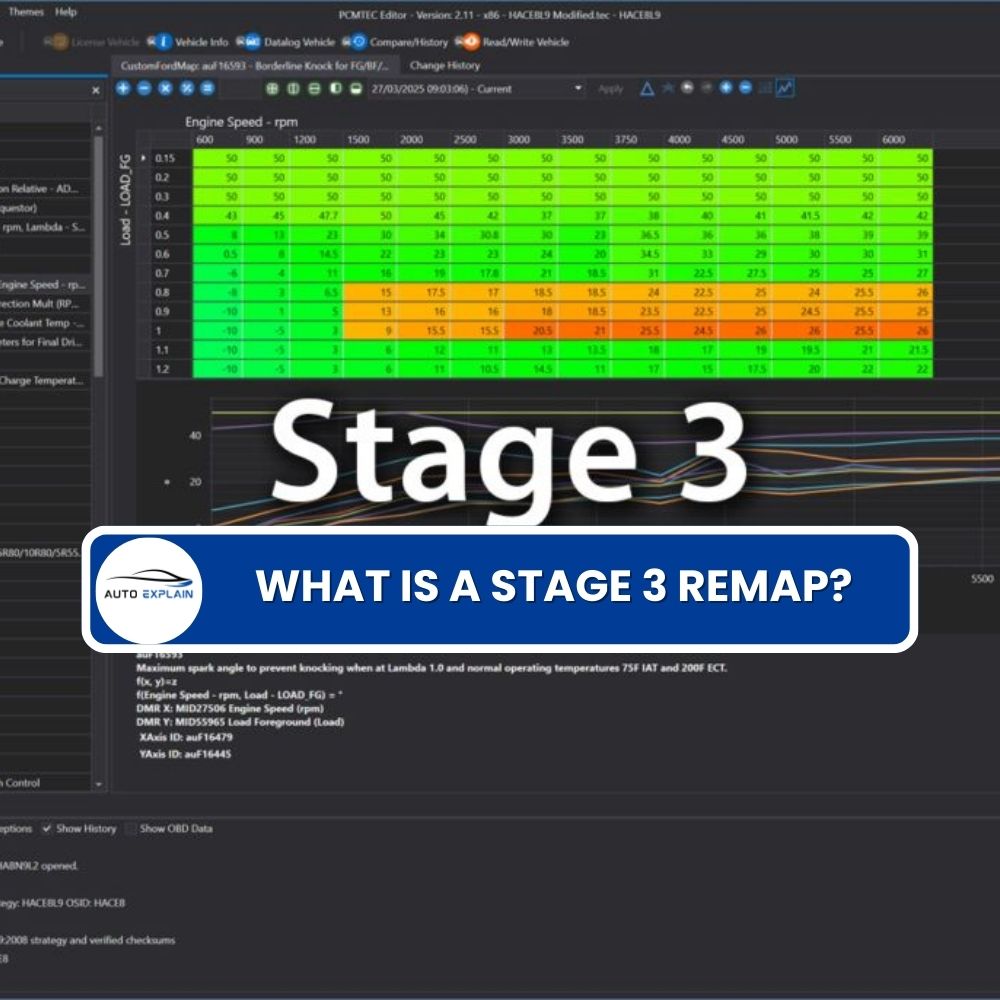
Stage 3 remap represents the highest level of ECU tuning in modern performance upgrades. Unlike Stage 1 or Stage 2, a Stage 3 remap is not just a software adjustment—it’s a fully customized calibration designed to work with major hardware upgrades such as big turbos, upgraded fuel systems, and enhanced cooling components.
This level of tuning is built for serious performance goals, where power, control, and reliability must be carefully balanced. In this guide, AutoExplain breaks down what a Stage 3 remap really is, how it differs from other tuning stages, what hardware is required, and who this type of upgrade is truly meant for—so you can decide if Stage 3 is the right step for your build.
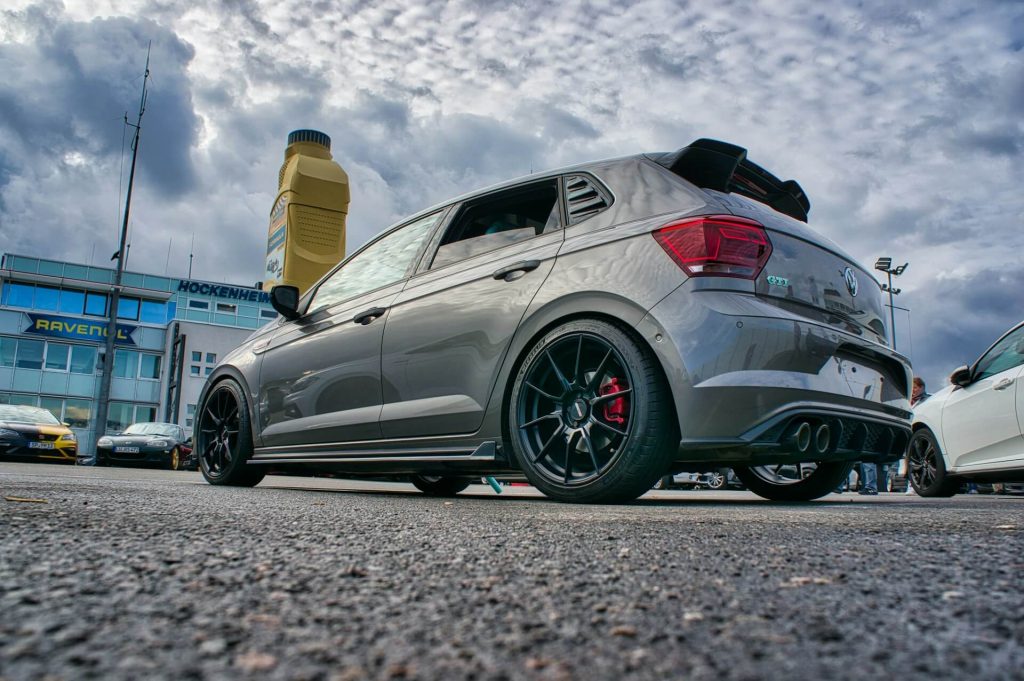
A Stage 3 remap is the most advanced level of engine calibration, designed specifically to synchronize the vehicle’s Engine Control Unit (ECU) with extensive aftermarket hardware modifications. While earlier stages focus on stock or minor bolt-on components, Stage 3 is essential when an engine’s volumetric efficiency has been fundamentally altered through major mechanical upgrades.
Here is a detailed breakdown of what constitutes a Stage 3 Remap:
Because original manufacturers calibrate ECUs for standard factory engines, they cannot account for the massive increase in airflow and fueling requirements of a Stage 3 setup. Typical hardware supporting this stage includes:
In a Stage 3 setup, tuners must use professional software like WinOLS to perform map rescaling. This technical process involves:
At Stage 3 power levels, the risk of mechanical failure or engine knocking increases significantly. Expert tuners focus on
Due to the complexity of Stage 3 tuning, professional validation is mandatory. This includes using a Chassis Dynamometer (Dyno) to simulate various road loads and wideband AFR sensors to monitor real-time combustion health. This scientific approach ensures that the vehicle moves beyond “standard” remapping to become a fully customized and high-performance motorsports setup.
The differences between Stage 1, Stage 2, and Stage 3 remaps lie in the level of hardware integration, software complexity, and the resulting performance gains.
A Stage 1 remap is a software-only optimization designed to improve the performance of a vehicle while it remains in its standard factory hardware configuration.
Stage 2 moves beyond software by incorporating minor hardware upgrades, typically focused on improving the engine’s “breathing” or volumetric efficiency.
Stage 3 is the pinnacle of tuning, where the software is fundamentally rewritten to synchronize with major mechanical changes to the engine’s core subsystems.
Quick Comparison Table
| Feature | Stage 1 | Stage 2 | Stage 3 |
| Hardware | 100% Stock | Intakes/Exhaust | Turbo/Injectors/Internals |
| Software | Table Optimization | Adaptive + DTC Removal | Map Rescaling |
| Difficulty | Simple/Safe | Moderate | Highly Complex |
| Primary Goal | Drivability/Efficiency | Mid-range Punch | Maximum Power |
See detail at: What are the Different Stages of Car Tuning?
Expecting a specific horsepower or kilowatt figure from a Stage 3 remap is difficult because the output is entirely dependent on the specific hardware modifications installed. However, based on the technical limits and goals described in the sources, you can expect power levels that represent the absolute performance pinnacle of the engine’s mechanical design.
The following factors define the power expectations for a Stage 3 setup:
While standard performance increases for stock components often involve raising turbo boost pressure by 5% to 10%, a Stage 3 remap is designed to manage airflow and fueling for upgraded aftermarket turbochargers that far exceed these factory margins [121, Stage 3 sapo]. Because Stage 3 fundamentally alters the engine’s volumetric efficiency with parts like performance camshafts and high-flow headers, the resulting power gains are significantly higher than the software-only optimizations of Stage 1.
In a Stage 3 configuration, tuners move beyond the typical 10 to 20% increases seen in standard remapping.
In diesel applications, such as CRDI engines, the sources note that these systems can produce up to 25% more torque than gasoline engines with the same amount of fuel. A Stage 3 diesel remap, utilizing high-pressure common rail adjustments and increased injection duration, pushes this torque surge even further, making it ideal for heavy hauling or high-performance competition.
For extreme builds, Stage 3 may involve transitioning to a standalone or adjustable ECU (like Haltech or MoTeC). These systems are used by professional tuners to extract “high power” for motorsports events, utilizing features not available on stock ECUs, such as:
Summary of Expectation
| Feature | Stage 1/2 Expectation | Stage 3 Expectation |
| Boost Increase | 5% – 10% on stock turbo | Limited only by the size of the aftermarket turbo [Stage 3 sapo] |
| Torque Management | 10% – 20% increase in limiters | Limiters set to 100% or removed |
| Calibration Goal | Improved drivability/efficiency | Maximum possible power for motorsports/racing |
Note: The sources emphasize that Stage 3 power must be validated on a Chassis Dynamometer (Dyno) to measure actual wheel horsepower and to monitor the Air-Fuel Ratio (AFR) to prevent engine destruction at these high limits.
Budgeting for a Stage 3 remap is significantly more complex than earlier stages because it involves a combination of high-end mechanical components, professional-grade tuning equipment, and specialized technical knowledge. While the sources do not provide a single total price, they outline the specific areas where costs are concentrated.
Unlike software-only Stage 1 tunes, a Stage 3 remap requires extensive physical modifications to the engine’s core subsystems to handle increased volumetric efficiency and thermal loads.
For absolute performance or motorsports applications, the factory ECU may be replaced with a standalone unit (such as Haltech, AEM, or MoTeC).
If you are performing the remap yourself or running a workshop, there are significant costs associated with genuine tools and software.
Expert labor and validation are critical for Stage 3 setups to ensure the engine runs scientifically and safely.
In summary, a Stage 3 budget must account for thousands of dollars in high-performance hardware and standalone electronics, as well as the ongoing costs of licensed tuning software and professional dyno validation.
Stage 3 Remapping at AutoExplain is built for high-performance projects where the goal is not just a mild power increase, but extracting the maximum potential from a fully upgraded engine setup. This is an advanced tuning service that requires a precise balance between upgraded hardware and fully custom ECU calibration.
At AutoExplain, we do not use generic Stage 3 files. Every Stage 3 remap is developed specifically for the vehicle based on:
Our Stage 3 Remap process includes:
Stage 3 Remap is ideal if you:
AutoExplain focuses on correct, safe, and knowledge-driven tuning, not inflated dyno numbers. Our goal is to deliver Stage 3 remaps that are powerful, stable, and reliable in real-world conditions.
If you’re planning a Stage 3 build or need expert advice on hardware and tuning, contact AutoExplain via WhatsApp for professional support and consultation.
A Stage 3 Remap is the highest level of ECU tuning, designed for serious performance builds with extensive hardware upgrades. It’s not about quick gains or generic files, but about custom calibration, precise control, and long-term reliability at high power levels.
When done correctly, Stage 3 tuning delivers exceptional performance while keeping the engine operating within safe limits. That’s why choosing the right tuner—and the right process—matters more than ever. If you’re ready for a proper Stage 3 build or need expert guidance, contact AutoExplain via WhatsApp +1 (936) 289 6695 for professional ECU tuning support.