
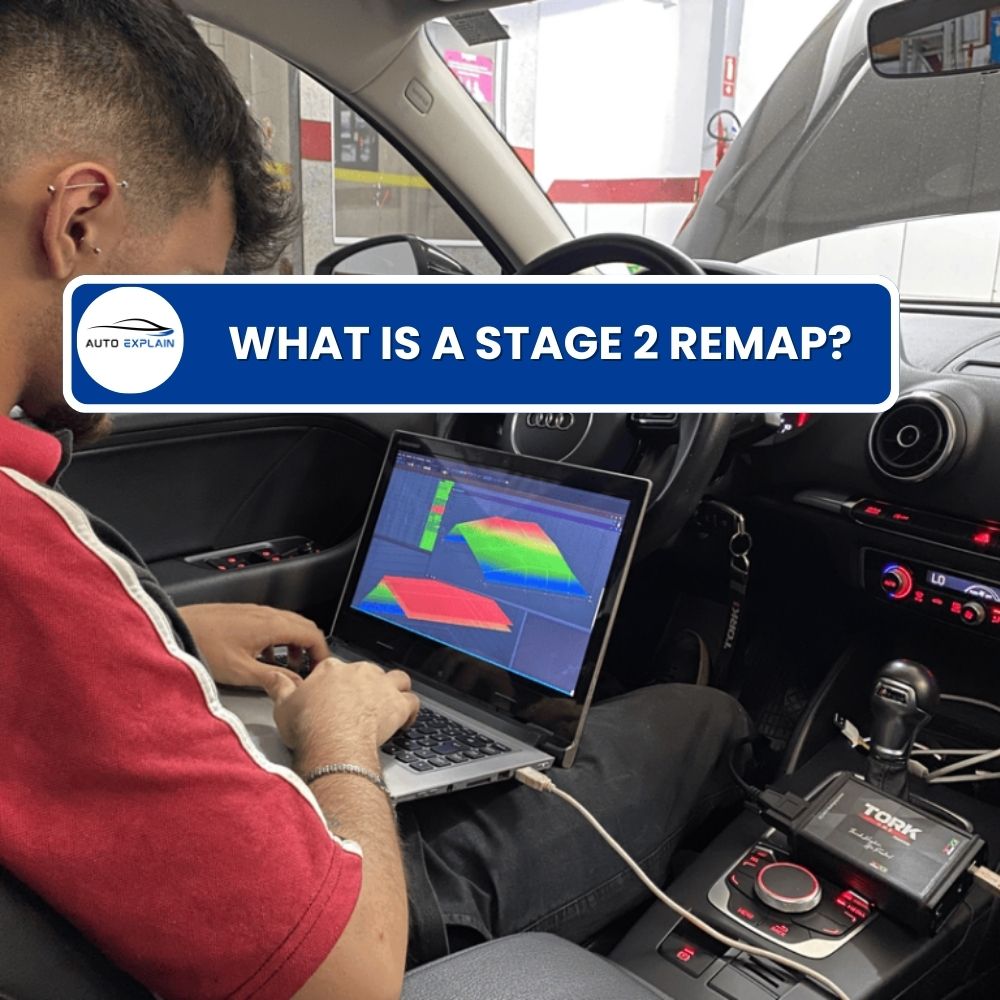
A Stage 2 remap is the next level of ECU tuning designed for drivers who want significantly more power and performance than a Stage 1 upgrade can offer. Unlike Stage 1, a Stage 2 remap requires supporting hardware modifications to safely handle increased boost pressure, torque, and drivetrain load. In this article, AutoExplain breaks down what a Stage 2 remap is, the hardware upgrades required, how it compares to a Stage 1 remap, and the expected performance gains of up to 30–50% on turbocharged vehicles—helping you understand whether Stage 2 tuning is the right choice for your car.

A Stage 2 remap is an advanced ECU calibration that requires specific hardware upgrades to fully maximize the performance gains from the software. Unlike Stage 1, which is software-only, Stage 2 tuning is designed purely for performance improvement and not fuel economy.
This type of remap typically involves adjustments such as:
Because of the higher engine output, a Stage 2 remap must be supported by upgraded hardware, which may include components such as a performance intake, upgraded intercooler, downpipe, exhaust system, or strengthened drivetrain parts—depending on the vehicle.
Stage 2 remaps are most commonly applied to turbocharged petrol and diesel engines and represent the next performance level above a Stage 1 remap. While Stage 1 can balance power and fuel efficiency, Stage 2 is focused exclusively on delivering maximum performance while ensuring the vehicle can safely handle the increased engine and drivetrain load.
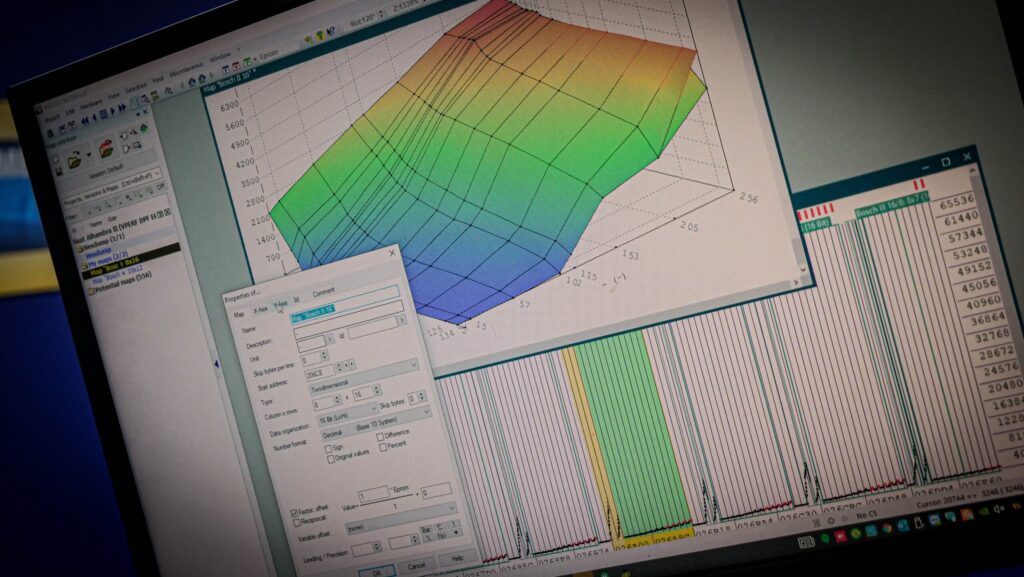
A Stage 2 remap is a more aggressive and performance-focused evolution of a Stage 1 remap.
Stage 1 remapping is commonly chosen to enhance the overall driving experience while retaining stock hardware. It improves throttle response, horsepower, torque, and reduces turbo lag, and when driven sensibly, it can also improve fuel efficiency. For this reason, Stage 1 is ideal for everyday road use and drivers looking for a balanced upgrade.
See more: What is a stage 1 remap?
Stage 2 takes these performance enhancements significantly further. The increased power levels exceed what standard factory components are designed to handle safely, which is why hardware upgrades are required. These upgrades allow the engine and drivetrain to cope with higher boost pressure and increased mechanical load.
In simple terms:
The most noticeable difference between Stage 1 and Stage 2 remapping is power output. A Stage 1 remap typically delivers around a 15–20% increase over factory power levels, while a Stage 2 remap can achieve 30–50% gains, depending on the vehicle and supporting modifications.
It’s important to note that results vary between vehicles, so consulting a professional tuner is essential to determine realistic and safe performance gains for your specific setup.

Yes. You do not need to complete a Stage 1 remap before moving to Stage 2.
A Stage 2 remap can be applied directly, provided the required hardware upgrades are installed first. Instead of performing a Stage 1 ECU calibration and upgrading later, a professional tuner can carry out a Stage 2 ECU calibration on the same day once the supporting components are fitted.
Because Stage 2 tuning pushes the engine beyond factory limits, proper hardware modifications are essential to ensure reliability, safety, and consistent performance.
A Stage 2 remap is significantly more aggressive than a Stage 1 calibration and places higher demands on the engine and drivetrain. To safely operate within this increased performance range, hardware upgrades are essential.
These supporting modifications allow the engine to handle higher boost pressure, increased torque, and greater thermal load without placing excessive strain on standard components. Proper hardware upgrades not only protect critical engine and drivetrain parts from premature wear but also ensure that power is delivered efficiently and consistently.
By combining a Stage 2 software calibration with the correct hardware setup, drivers can achieve maximum performance gains, improved power delivery, and enhanced reliability—whether on the road or on the track.
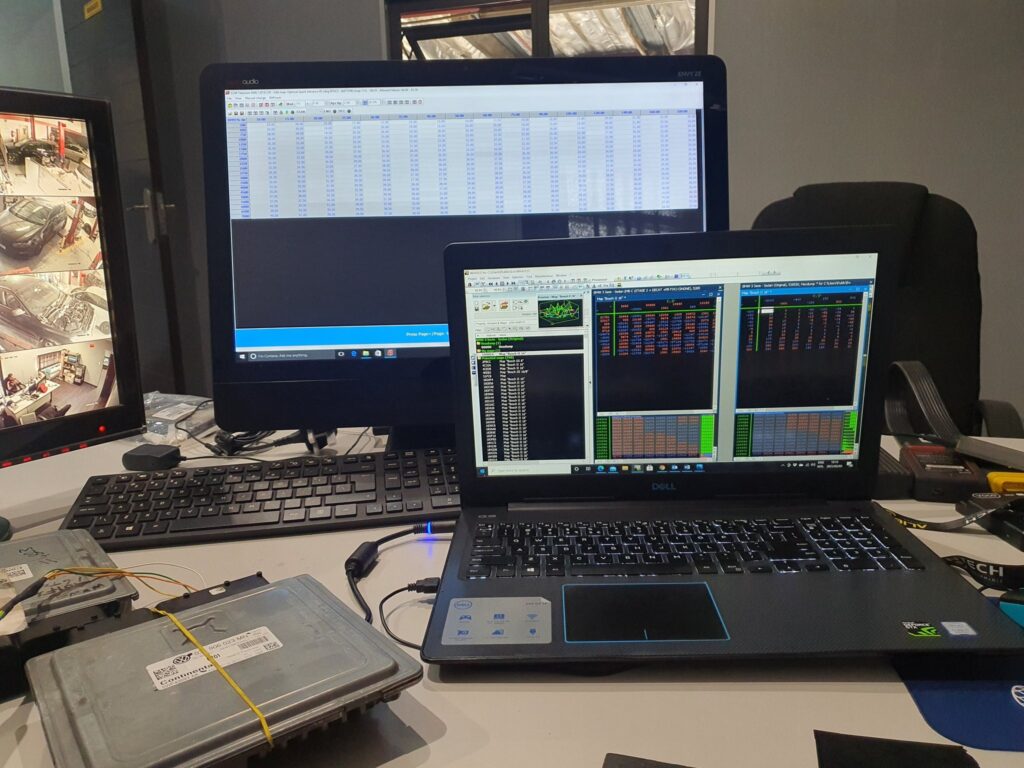
A Stage 2 remap requires supporting hardware upgrades to safely handle the increased power and drivetrain load. While exact requirements vary by vehicle, the most common Stage 2 performance upgrades include:
An upgraded or hybrid turbocharger is one of the most effective ways to increase engine performance. By allowing higher boost pressure and improved airflow, it delivers significant gains in horsepower and torque. When paired with a Stage 2 remap, turbo efficiency is optimized for maximum performance, with potential improvements in fuel efficiency under steady driving conditions.
A high-performance intercooler improves charge air cooling, reducing intake temperatures under increased boost. This results in reduced turbo lag, improved throttle response, and more consistent power delivery. Better cooling also helps protect the engine from heat-related stress, improving long-term reliability.
High-flow fuel injectors ensure the engine receives sufficient fuel to match increased airflow and boost pressure. This allows the engine to produce more power safely while maintaining proper air–fuel ratios. A Stage 2 remap recalibrates fuel delivery and timing to fully utilize the upgraded injectors, enhancing acceleration and overall performance.
A high-flow exhaust system improves exhaust gas flow, allowing the engine to breathe more efficiently. This reduces back pressure and supports higher power output when combined with a Stage 2 remap. While performance gains are substantial, it’s important to note that upgraded exhaust systems may increase exhaust noise levels.
An induction kit increases airflow into the engine, improving combustion efficiency and throttle response. When matched with a Stage 2 ECU calibration, the engine management system is optimized to take full advantage of the increased airflow, resulting in noticeable gains in power and torque.
Every vehicle requires a custom hardware setup to safely achieve the performance levels of a Stage 2 remap. If the necessary supporting modifications are not installed, the vehicle will not be able to safely or effectively deliver Stage 2 power gains.
When correctly equipped, a Stage 2 remap can increase BHP and torque by approximately 30%–50%, dramatically transforming vehicle performance and driving dynamics—both on the road and on the track.
A Stage 2 remap can deliver significant performance gains, particularly on turbocharged vehicles, with typical increases ranging from 30% to 50% in horsepower and torque when paired with the correct hardware upgrades.
For naturally aspirated engines, power gains are considerably lower. As a result, Stage 2 tuning is often avoided for non-turbo engines, as the cost of labor and required parts usually outweighs the performance benefits achieved.
Some of the most commonly Stage 2–tuned vehicles—such as the Audi S3 and Volkswagen Golf R—share the same engine platform and therefore achieve similar results.
Below is an example of typical power gains:
Stage 1 Remap
Stage 2 Remap
Actual gains may vary depending on vehicle condition, hardware configuration, fuel quality, and calibration strategy.
If you’re aiming for maximum performance, sharper throttle response, and a dramatically transformed driving experience, a Stage 2 remap is the next logical step beyond Stage 1. When executed correctly with supporting hardware, it delivers track-level performance while remaining suitable for road use.
If you’re considering a Stage 2 remap, AutoExplain provides expert consultation, custom ECU calibration guidance, and support throughout your build process.
Contact AutoExplain today for professional advice and a no-obligation consultation tailored to your vehicle and performance goals.
A Stage 2 remap is a powerful performance upgrade designed for drivers who want to take their vehicle beyond the limits of standard ECU tuning. By combining an aggressive ECU calibration with the correct supporting hardware, a Stage 2 remap can deliver substantial gains in horsepower, torque, and overall driving performance, particularly on turbocharged engines.
If you’re looking for maximum performance and are prepared to invest in the right supporting modifications, a Stage 2 remap is a highly effective next step in your vehicle’s tuning journey.
Please note: ECU tuning and hardware modifications may affect vehicle legality, emissions compliance, and insurance, depending on local regulations—always check the laws in your region before proceeding.