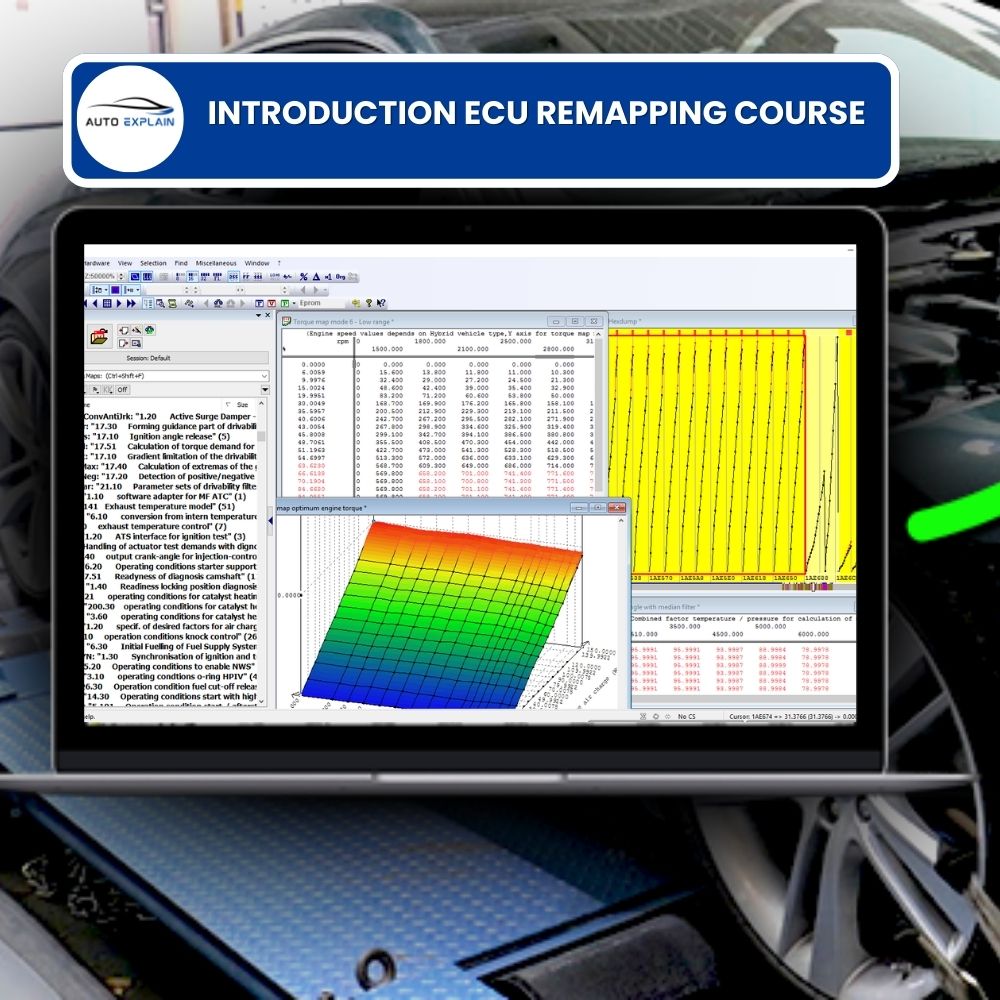
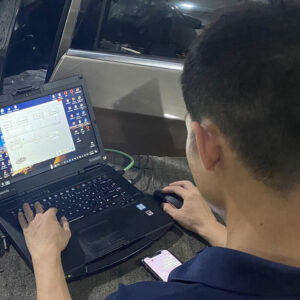
ECU remapping is no longer just about modifying maps or following preset files — it requires a deep understanding of engine management systems, control logic, and real-world calibration strategies. Complete ECU Remapping: WinOLS Training is designed to provide a structured, in-depth learning path for technicians, tuners, and automotive professionals who want to truly master ECU remapping using WinOLS, from fundamental concepts to advanced practical applications. Rather than relying on generic tuning files or trial-and-error methods, this ECU Remapping Course focuses on building solid technical foundations, understanding ECU behavior, and applying proven calibration techniques in real-world scenarios.
With a comprehensive curriculum, integrated AI-assisted learning, multilingual support, and multiple content formats including videos, technical documents, and interactive learning tools, the course offers a modern and efficient approach to professional ECU tuning education. In this article, we will explore the course in detail, developed and structured by experienced technicians from AutoExplain with many years of hands-on industry expertise.
Introduction to the ECU Remapping Course
Complete ECU Remapping: WinOLS Training is a comprehensive professional training program focused on ECU remapping using WinOLS. The course is designed for individuals who want to understand ECU systems at a deeper technical level and apply correct, safe, and effective remapping strategies in real-world applications.
This ECU Remapping Course is suitable for automotive technicians, ECU tuners, workshop owners, engineers, and enthusiasts who are working with diesel and petrol engine management systems and want a structured, step-by-step learning path — from ECU fundamentals to advanced calibration, DTC handling, and real tuning workflows.
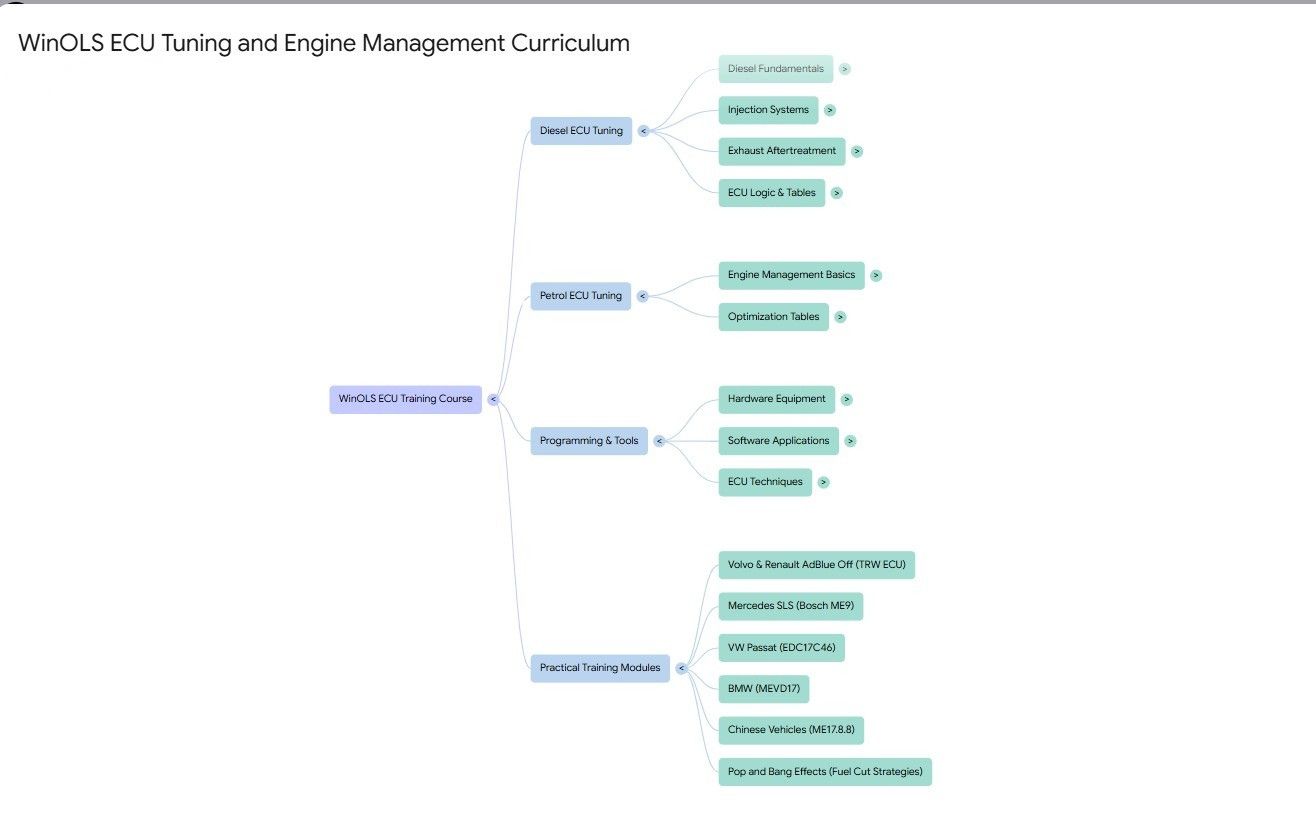
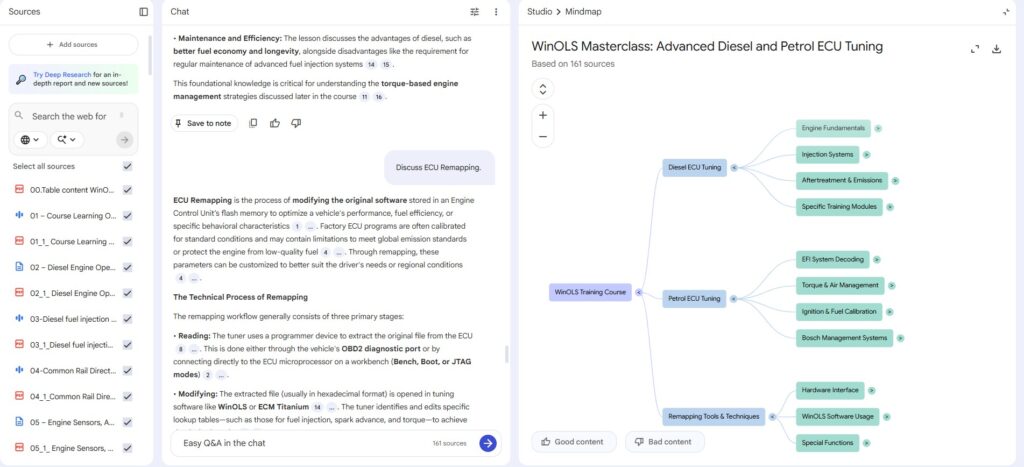
Mindmap WinOLS ECU Tuning and Engine Management Curriculum
Course Overview – What This ECU Remapping Course Teaches
Complete ECU Remapping: WinOLS Training is a structured professional training program focused on ECU remapping for diesel and petrol engines using WinOLS and related tuning tools. The course is designed to guide learners from foundational knowledge to advanced, real-world ECU remapping applications.
ECU Remapping Course Overview
- Comprehensive ECU remapping training for diesel and petrol engines
- 160+ structured lessons, each aligned with specific technical topics
- Step-by-step learning path from basic concepts to advanced tuning techniques
- Focus on practical, workshop-ready ECU remapping skills
- Designed for long-term skill development, not shortcut-based tuning
Knowledge Scope Covered in the Course
The ECU Remapping Course covers a wide technical range, including:
- Engine fundamentals and ECU control logic
- Diesel and petrol engine management systems
- Sensors, actuators, and ECU communication
- Exhaust aftertreatment systems (DPF, EGR, SCR / AdBlue)
- Professional ECU tuning software, with a strong focus on WinOLS
- Real-world ECU reading, writing, cloning, and remapping workflows
- Calibration strategies for torque, fuel, turbo, and ignition systems
- Advanced functions such as DTC handling, scripting, and specialized tuning solutions
The course is structured to guide learners from basic concepts to advanced ECU remapping techniques. You will start by understanding how engines and ECUs work, then progress step by step toward professional-level calibration, file modification, and advanced problem-solving techniques.
This foundation-to-advanced approach allows learners to build confidence, reduce trial-and-error risks, and apply ECU remapping knowledge effectively in real workshop environments.
What You Will Learn in ECU Remapping Course?
This ECU Remapping Course is designed to deliver deep technical knowledge and practical skills required for professional ECU tuning. The course content is organized into the following core areas:
Engine Fundamentals and Control Systems
You will build a solid technical foundation in engine operation and ECU control logic, including:
- Diesel engine operation (2-stroke and 4-stroke principles)
- Common Rail Direct Injection (CRDI) systems
- Electronic Fuel Injection (EFI) systems for petrol engines
- ECU architecture and decision-making logic
- Sensors and actuators: temperature, pressure, RPM, MAF, exhaust sensors, injectors, turbo actuators
- Exhaust aftertreatment systems and software handling:
Tuning Software Skills and WinOLS Masterclass
WinOLS is the core software used throughout the course. You will learn how to work with it in a professional and systematic way:
- Installation, configuration, and workspace setup
- Map identification and analysis in hexadecimal and decimal formats
- Understanding map structures and axis logic
- Managing Map Packs and DAMOS / A2L files
- Overview of supporting tuning software:
- ECM Titanium
- Swiftec
- Race EVO
Practical ECU Programming and Real-World Remapping Techniques
This section focuses on real workshop workflows and hands-on techniques:
ECU reading and writing via:
- OBD
- Bench mode
- Boot mode
- JTAG
ECU cloning:
- Full data transfer including VIN and immobilizer
Calibration and map modification strategies:
- Torque modeling and limiters
- Fuel quantity, duration, timing, and rail pressure
- Turbo boost and VGT duty cycle control
- Petrol ignition tuning and knock control
Advanced and Specialized ECU Solutions
You will also learn advanced tuning and repair techniques used in professional environments:
- Diagnostic Trouble Code (DTC) identification and permanent removal
- Pop and Bang / exhaust sound tuning strategies
- Script creation in WinOLS to automate repetitive calibration tasks
Brand-Specific and ECU-Specific Training
The course includes structured lessons covering a wide range of ECUs and vehicle platforms:
- Bosch: EDC15, EDC16, EDC17, ME7, ME9, MED17, MEVD17
- Commercial vehicles: Volvo, Renault (TRW ECUs), Kenworth (Continental)
- Other manufacturers: Denso, Delphi (MT22, MT38, MT86), Hitachi, Mitsubishi
Each learning material is aligned with a specific topic, allowing learners to progress logically and revisit individual subjects when needed.
Key Advantages of This ECU Training Course
- AI Technology Integration: AI supports ECU map analysis, tuning logic validation, and file comparison to reduce errors and speed up learning.
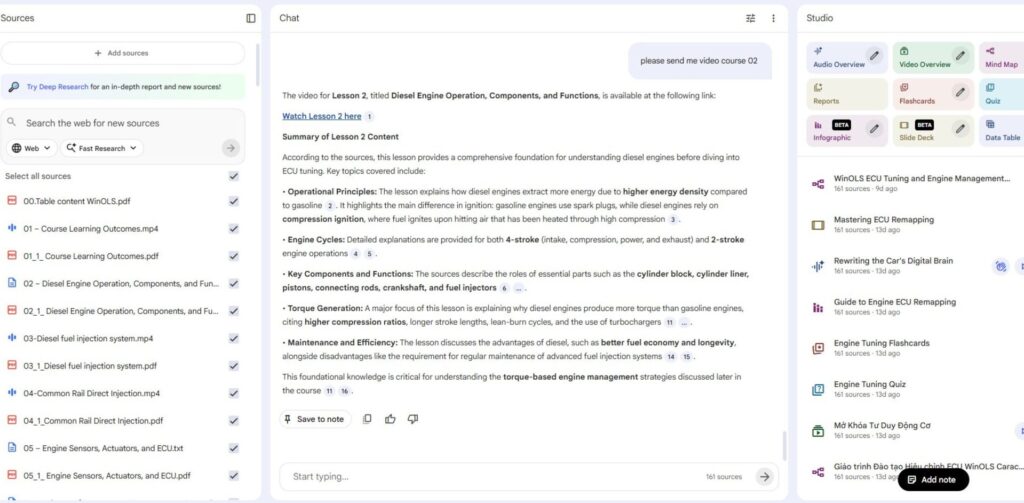
- Dedicated Video for Every Lesson: Each module includes step-by-step video tutorials, helping learners clearly understand real ECU tuning and diagnostic procedures.
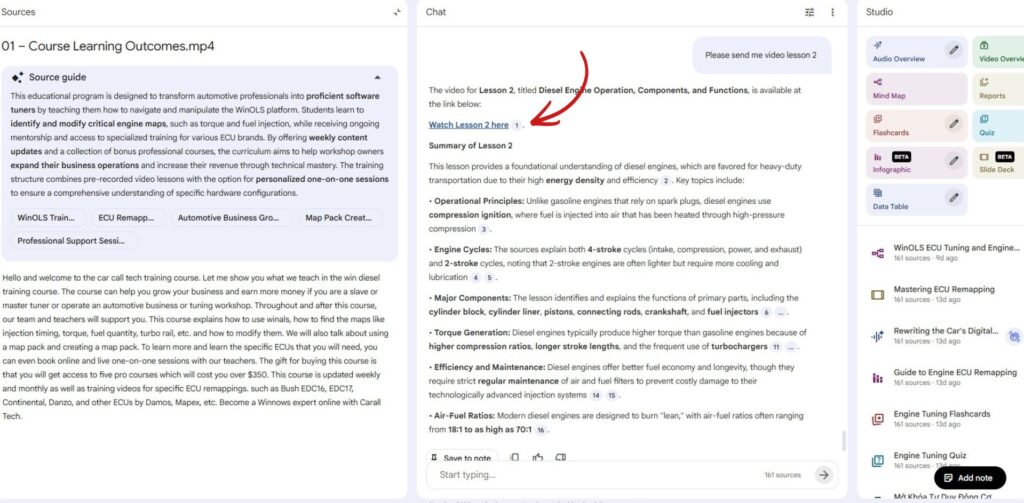
- Direct Q&A with Instructors: Learners can ask questions directly during the course to clarify concepts and solve real tuning problems.
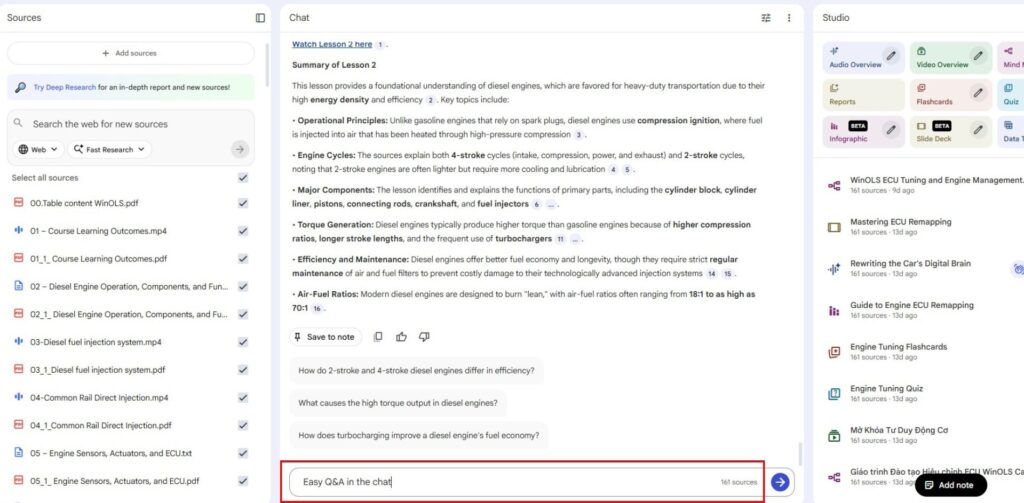
- Multilingual Learning Support: Course content is available in multiple languages, making ECU knowledge accessible to a wider audience.
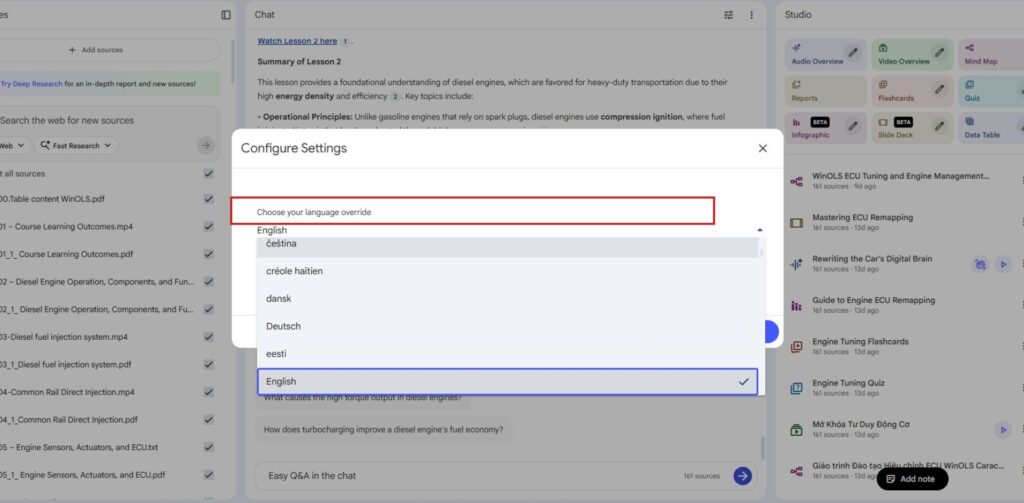
- Mind Maps for Structured Understanding: Mind maps help organize ECU logic clearly, improving comprehension and long-term memory.
- Visual Infographics: Complex ECU concepts are simplified through clear, technical infographics.
- Professional Slide Decks: Well-structured slide decks support each lesson for easy review and reference.
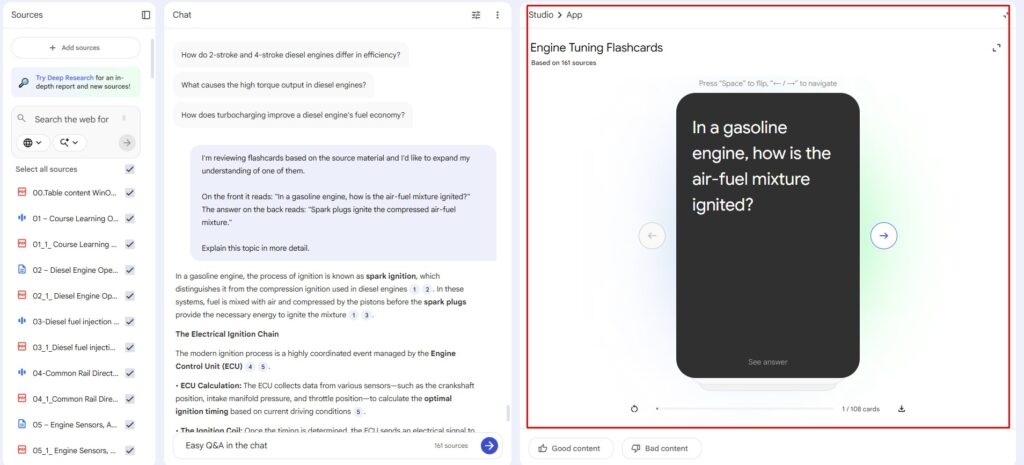
- Multiple Learning Formats: A combination of videos, diagrams, slides, mind maps, and AI-assisted learning enhances retention and learning efficiency.
Selected Highlights from the ECU Remapping Training Course
ECU Remapping & ECU Cloning
This module provides a comprehensive understanding of ECU programming, ECU remapping, and ECU cloning, covering both theoretical foundations and real-world applications.
You will learn safe and professional ECU reading and writing procedures using OBD, Bench, and Boot modes, following J2534-standard workflows to ensure data integrity and ECU safety.
Key learning outcomes include:
- Logical ECU file modification to increase performance, optimize fuel efficiency, or resolve DTC-related issues
- Practical ECU cloning techniques, including VIN transfer, immobilizer data migration, and coding, enabling ECU replacement without key reprogramming
- Hands-on application across passenger vehicles and commercial trucks, supporting a wide range of modern ECU platforms
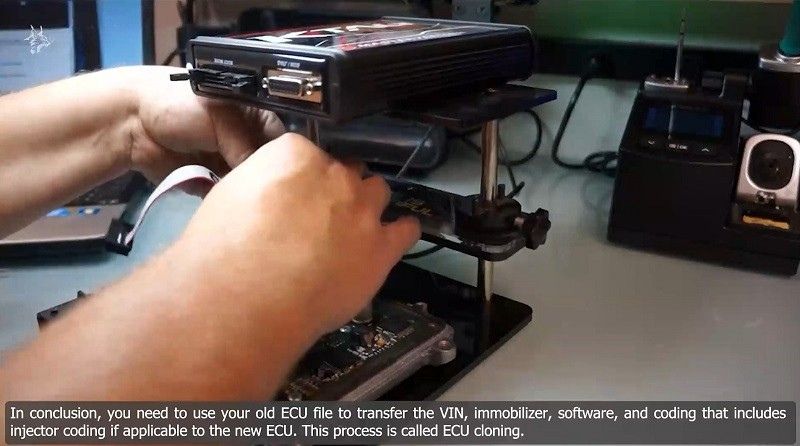
This module is designed to equip learners with practical, job-ready skills that can be directly applied in real diagnostic, tuning, and ECU replacement scenarios.
ECU Read/Write & Reflashing Procedures
This lesson focuses on correct and safe ECU reading and writing procedures, covering workflows from OBD programming to Bench and Boot modes for ECUs with tuning protection.
You will clearly understand:
- When an ECU can be safely read and written via OBD, and when Bench/Boot access is mandatory, especially for protected ECUs such as Bosch ME17 and EDC17
- Essential best practices before flashing, including DTC checks, vehicle condition assessment, voltage stability, and proper use of a battery stabilizer
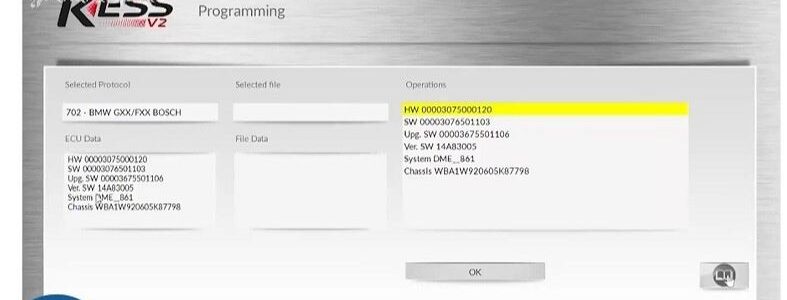
- Real-world ECU read/write workflows using KESS V2 and CAS V2, including ECU identification, reading, writing, and handling virtual reads
The primary goal of this module is to ensure safe, reliable ECU flashing — avoiding ECU bricking, communication errors, or data corruption — and preparing learners for professional-grade ECU remapping work.
Torque Calculation and Monitoring Methods
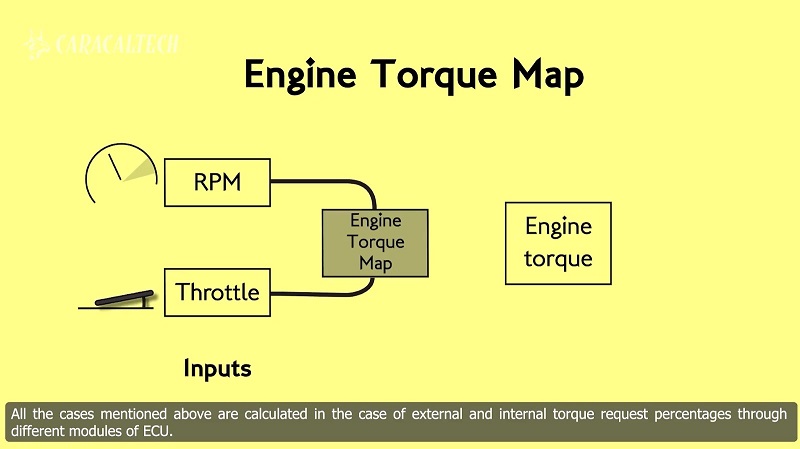
This lesson explains torque-based engine control strategies, which form the foundation of most modern ECUs.
You will learn:
- Why modern ECUs calculate and control torque instead of power, and how torque is used as the main control parameter
- How the ECU combines torque requests from multiple sources, including driver demand, transmission, air conditioning, and auxiliary loads
- In-depth analysis of the core torque-related map chain, including:
- Torque request
- Torque limiters
- Fuel quantity
- Injection duration and timing
- Rail pressure
- Boost control and their respective limits
- How torque monitoring mechanisms work, and why incorrect remapping can trigger limp mode
- How to tune torque maps according to ECU logic, avoiding torque-related DTCs and built-in anti-tuning protection strategies
This module helps you develop a structured and logical tuning approach, ensuring stable performance gains without compromising ECU safety systems.
Start of Injection (SOI) Control Strategies
This lesson focuses on Start of Injection (SOI) and explains why injection timing is a critical factor affecting engine power, fuel consumption, noise, and emissions.
You will learn:
- What SOI is and how injection timing directly influences combustion quality
- The effects of advanced vs. retarded injection timing on:
- NOx emissions
- Smoke and particulate formation
- HC emissions
- BSFC (Brake Specific Fuel Consumption)
- BTE (Brake Thermal Efficiency)
- Cylinder pressure and mechanical stress
- How SOI maps are structured and controlled based on RPM, fuel quantity, temperature, and engine load
- Differences in SOI strategies across no load, part load, full load, and auxiliary load conditions such as air conditioning
- Practical guidance on reading and interpreting SOI maps in WinOLS (EDC17), including:
- Axis identification
- Factors and offsets
- 2D and 3D visualization
- Typical SOI progression logic
- Why SOI tuning is a critical tuning boundary: incorrect calibration can lead to power loss or engine damage, while correct optimization can deliver noticeable performance gains—often at the cost of increased emissions
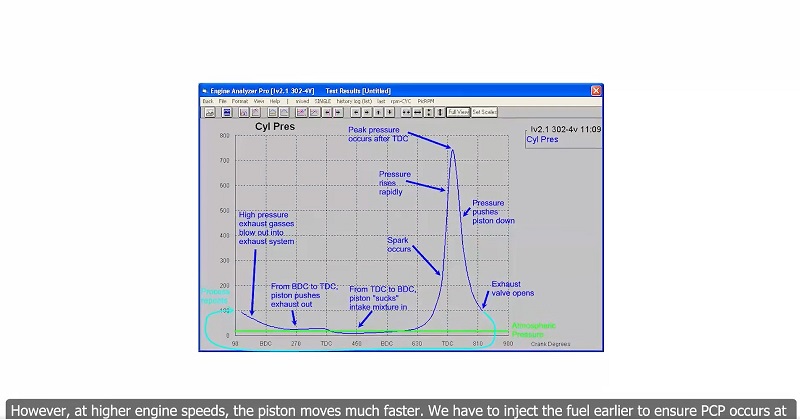
This module emphasizes precision and ECU logic, helping you tune injection timing safely while balancing performance, reliability, and emissions constraints.
Bosch ME9 Engine Control Unit Training (Petrol ECU)
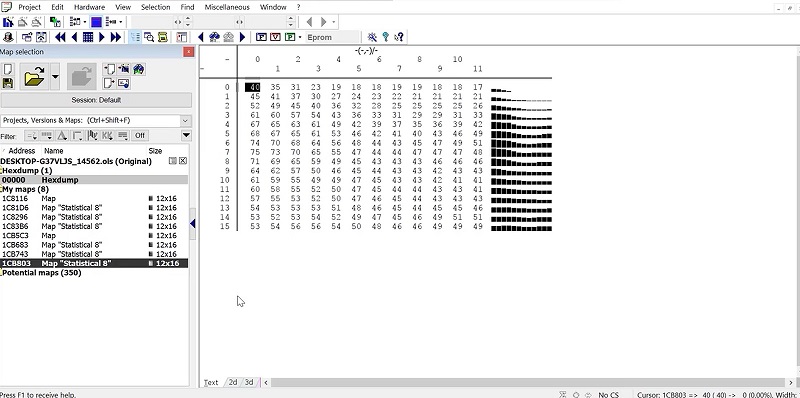
This module provides a practical introduction to the Bosch ME9 (ME9.7) engine control unit, using real-world calibration examples from vehicles such as the Mercedes-Benz SLS, analyzed and modified using WinOLS.
Key learning points include:
- Understanding the Bosch ME9 ECU architecture and how petrol ECUs differ from diesel control strategies
- Identifying and analyzing real calibration maps in WinOLS, with a focus on correct axis detection, factors, and data consistency
- In-depth study of spark advance strategies, including:
- Basic ignition timing maps
- Optimal ignition maps
- Multiple spark maps (commonly 12×16 or 11×16 tables)
- Why ME9 often contains multiple maps with identical values—and why all related maps must be modified together
- Analysis and calibration of torque request, driver wish (pedal maps), and optimal engine torque, using both 2D and 3D visualization for logical tuning
- A key distinction of ME9 fuel control:
- Use of Injection Base and Injection Correction maps
- Direct AFR adjustment via multiplication factors, rather than requested lambda maps found in many other ECUs
- Practical tuning workflow combining spark, torque, and fuel calibration to achieve smooth, stable, and reliable performance gains
This lesson reinforces that while ME9 follows familiar Bosch torque-based logic, its fuel control structure requires a different tuning approach. Correctly balancing ignition timing, torque modeling, and fuel delivery is essential for safe and consistent power improvement on petrol engines.
Mercedes-Benz A200 Bosch MED17 Engine Management System
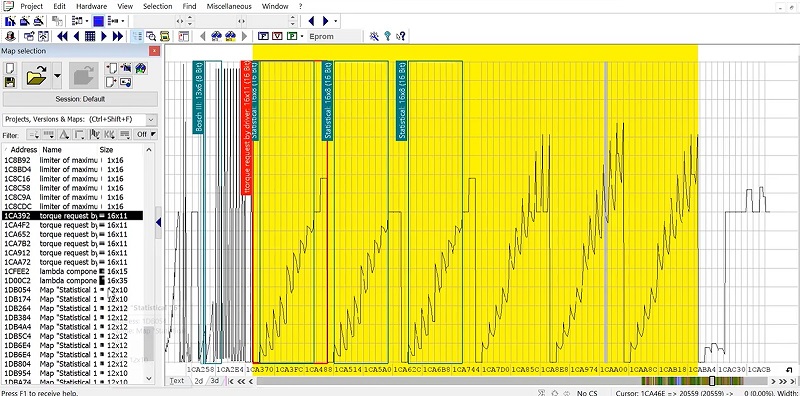
Overview of the Bosch MED17 ECU on the Mercedes-Benz A200, focusing on fast map identification in WinOLS using 2D view and right window. Analysis of core maps including Optimal Engine Torque, Spark Advance (16-bit), Driver Wish / Torque Request, and Requested Engine Load. Turbo control strategy covers boost target, boost limiter, and torque limiter, where Stage 1 tuning requires only a 5–10% increase without touching the compressor map. Explanation of Lambda/AFR maps (4096 = Lambda 1 ≈ AFR 14.7) and how to enrich mixtures for performance. Emphasis on Torque Monitoring, where synchronized tuning of torque–load–spark is essential to avoid limp mode.
Comprehensive Bosch ME9 ECU Training (Mercedes-Benz SLS)
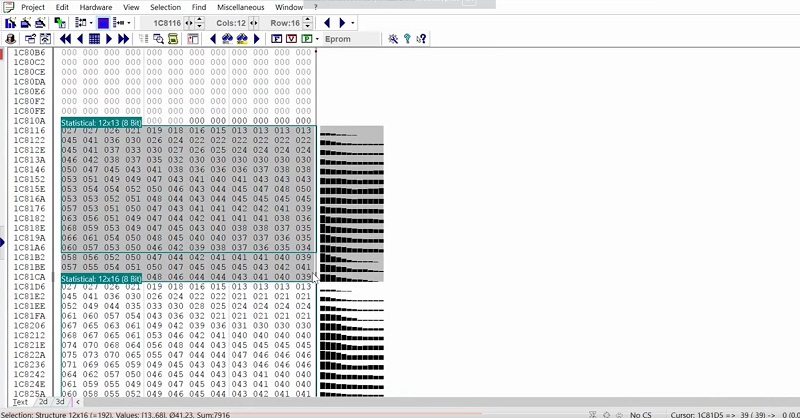
This lesson delivers a full-scale practical training on the Bosch ME9.7 ECU, using the Mercedes-Benz SLS as a reference platform. All previously covered ECU principles are applied directly, with no change in tuning mindset—only deeper execution.
Key learning points include:
- Understanding the Bosch ME9.7 architecture and how earlier ECU tuning knowledge transfers seamlessly to this platform
- Advanced focus on spark advance calibration, where:
- Multiple 12×16 ignition maps (basic and optimal) exist
- These maps often contain identical values, making it mandatory to modify all related maps simultaneously during remapping
- Detailed analysis and calibration of:
- Optimal Engine Torque
- Requested Engine Load
- Driver Wish (Torque Request)
using 2D map views to maintain logical consistency
- The key ME9 distinction in fuel control:
- Use of Injection Base and Injection Correction maps
- Direct AFR adjustment via multiplication factors, with no Requested Lambda maps present
- Practical tuning workflow centered around spark, torque, and injection, ensuring all interdependent maps are synchronized
This module highlights that ME9 tuning logic is straightforward but unforgiving—stable and reliable performance gains depend on coordinated calibration across all related spark, torque, and fuel maps, rather than isolated changes.
Disabling DTCs on Delphi MT22 ECUs
This lesson focuses on directly locating and disabling Diagnostic Trouble Codes (DTCs) inside the Delphi MT22 ECU firmware, commonly found on Chinese vehicles such as Lifan and Leon, without relying on external DTC removal software.
Key learning points include:
- Overview of the Delphi MT22 ECU architecture and common real-world use cases
- Proper WinOLS project setup for MT22:
- 8-bit view
- FF display
- 4-column layout (using the W key)
- Navigating directly to the DTC memory region at address 0x48005F
- Understanding the DTC table structure:
- Right two columns represent the actual fault codes
- Left two columns act as enable/disable switches for each DTC
- Practical method to disable specific DTCs by setting the corresponding switch value to 0
- No need for separate DTC removal software or diagnostic tools
- Typical applications:
- Oxygen sensor (O₂) faults
- Throttle-related errors
- Faults appearing after performance modifications or component removal
By the end of this lesson, students can safely and efficiently disable unwanted DTCs directly in the ECU file, making it a fast and effective solution for modified vehicles and markets where Delphi MT22 ECUs are widely used.
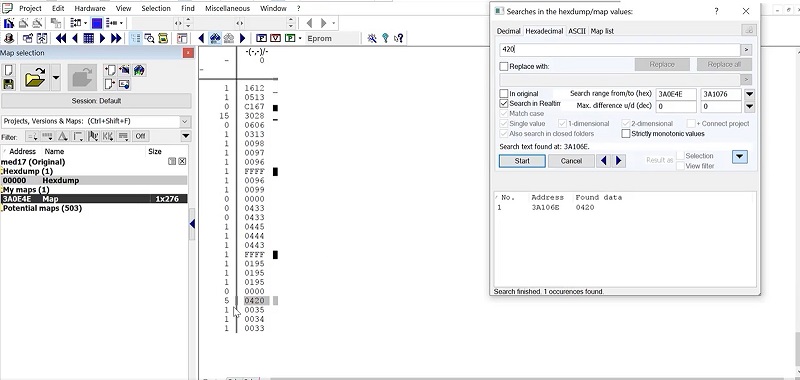
DTC Handling on Hitachi ECU (Nissan GTR)
Training on locating and disabling DTCs in the Hitachi ECU used on the Nissan GTR with WinOLS. Covers correct setup (Hex, 16-bit, High–Low, 6 columns) and accessing the DTC area. Explains DTC structure (fault code, control switch, separator) and how to disable DTCs by switching values to 00 or 02, with optional full removal. Practical use cases include misfire and O2 sensor faults, ensuring the scanner shows no errors.
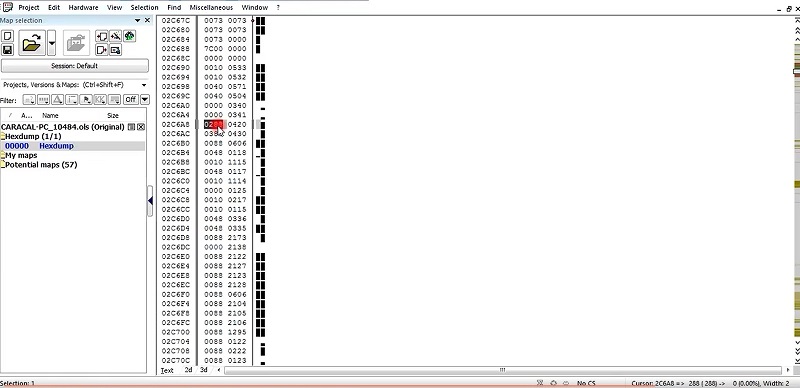
BMW MEVD17 Bosch ECU Training
Overview of Bosch MEVD17 ECU used in BMW vehicles, managing Valvetronic and Direct Injection, a common platform for Stage 1 tuning
Core maps involved: Spark Advance (8-bit), Torque Request, Optimal Engine Torque (limiters), AFR/Lambda
Safe Stage 1 tuning strategy:
- Mild ignition advance (+2–6°)
- Torque limit increase 10–15%
- Rail pressure increase not recommended
Typical safe AFR range 12–13, prioritizing engine protection and knock resistance
Inability to locate correct map structures indicates insufficient understanding of Bosch ECU logic and the need to revisit fundamentals
Who Should Take the ECU Remapping Training Course?
- Automotive Technicians & Mechanics: Professionals who want to upgrade their skills in ECU programming, remapping, and diagnostics.
- ECU Tuning Beginners: Learners starting from zero who want a structured, logic-based foundation in ECU tuning.
- Experienced Tuners Wanting Deeper Knowledge: Tuners who can already remap but want to fully understand torque-based logic, WinOLS analysis, and ECU strategies.
- Workshop Owners & Service Managers: Garage owners looking to expand services such as ECU remapping, DTC removal, and performance tuning.
- Automotive Engineers & Technical Students: Those with an engineering background who want practical, real-world ECU tuning skills.
- Car Enthusiasts & Performance Builders: Enthusiasts who want to understand how ECU tuning really works beyond “copy–paste files.”
The ECU Remapping Training Course provides a solid, logic-based foundation in modern ECU tuning, from safe read/write procedures to torque-based control strategies and real WinOLS map analysis. With hands-on case studies, AI-supported learning tools, and multiple learning formats (videos, mind maps, infographics, and slides), this course goes beyond typical online training.
Whether you are a beginner, an experienced tuner, or a workshop owner, this course helps you build real-world skills, avoid costly mistakes, and confidently apply ECU remapping in practical jobs—turning technical knowledge into professional results.
If you need any assistance regarding the ECU Remapping Training Course, contact AutoExplain via WhatsApp +1 (936) 289 6695 for the best support!
You might also be interested in: